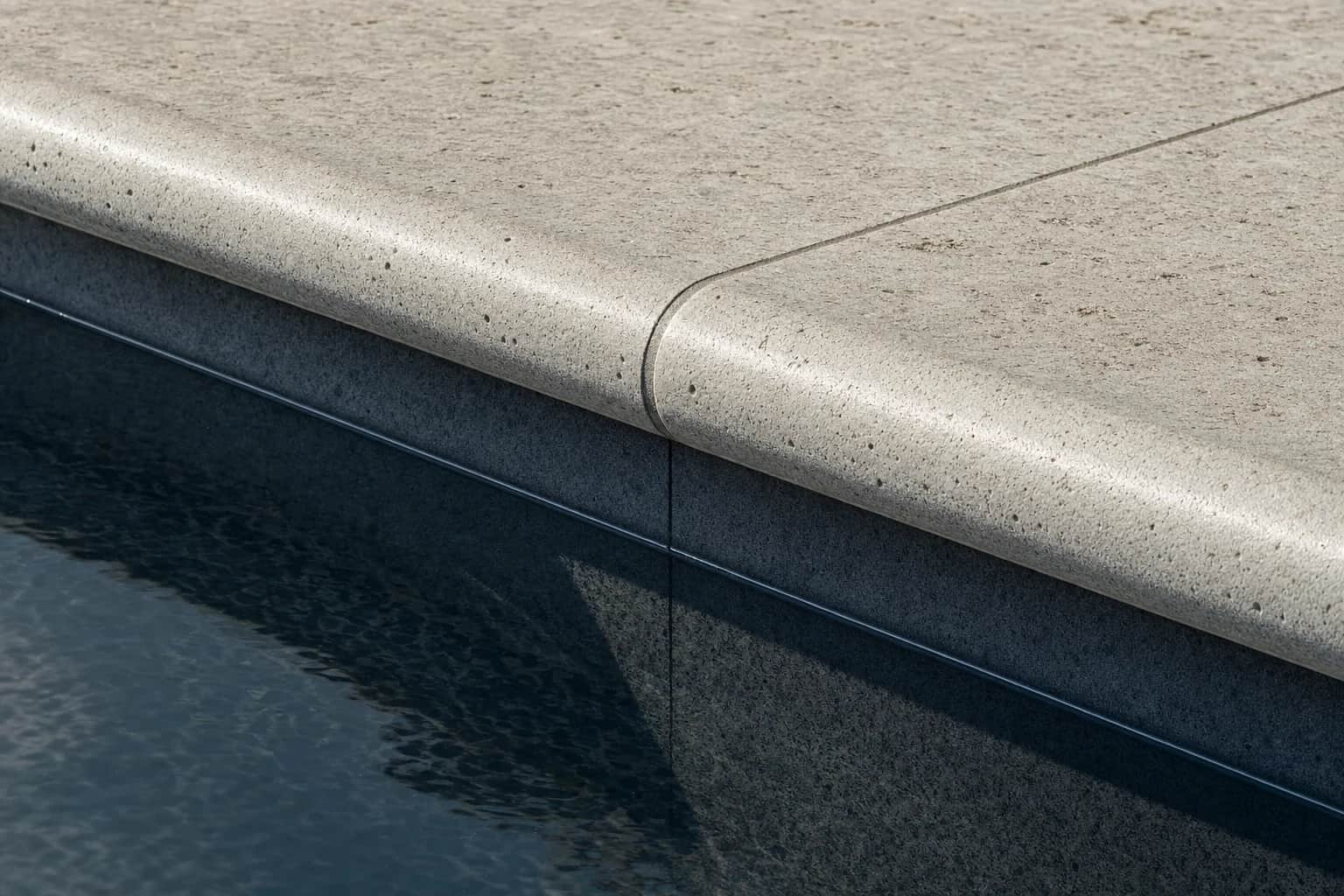
Bullnose
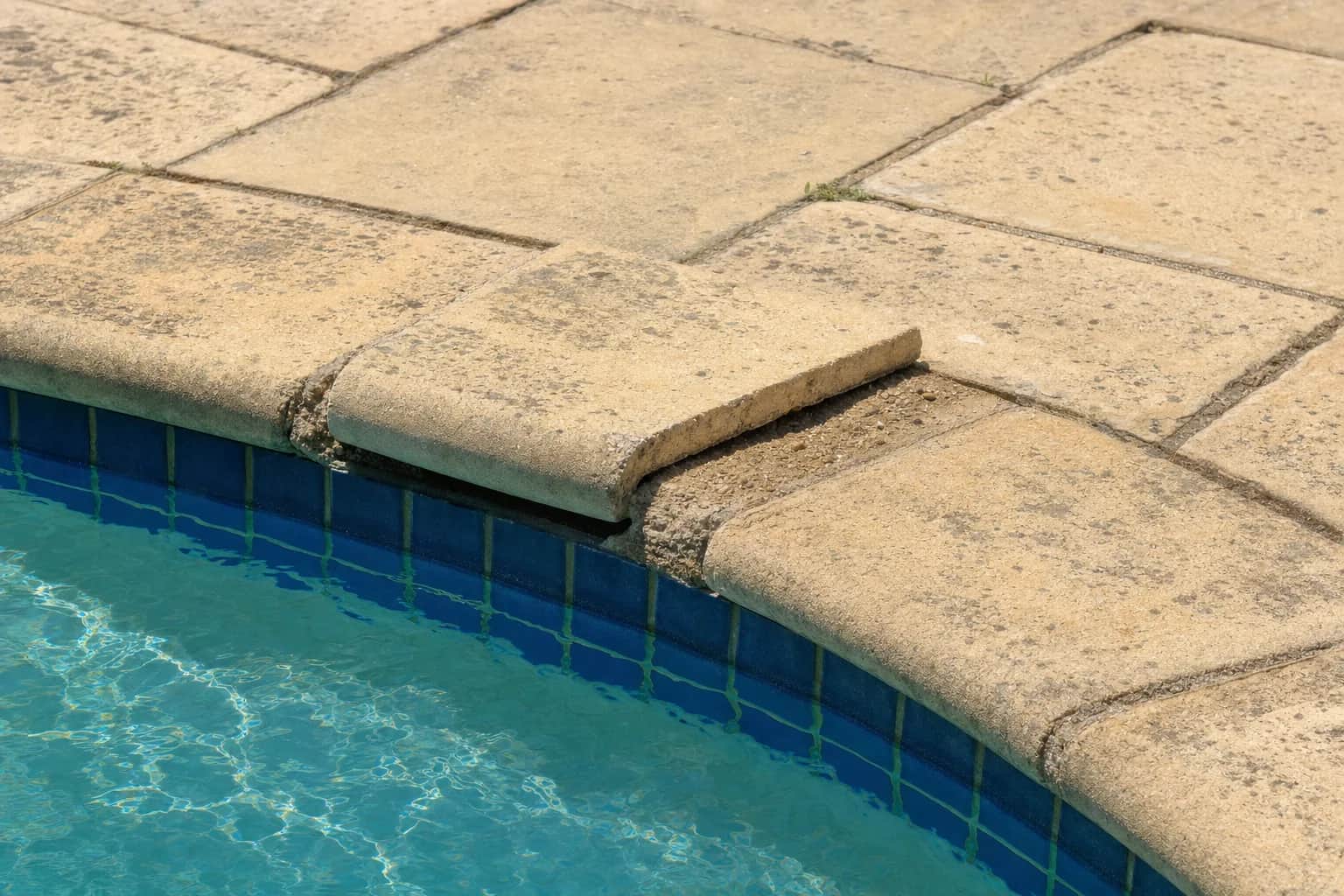
A fully rounded front edge. The softest to hold and to sit on, and the most forgiving if the pool isn't perfectly true. It's the usual choice in travertine and limestone.
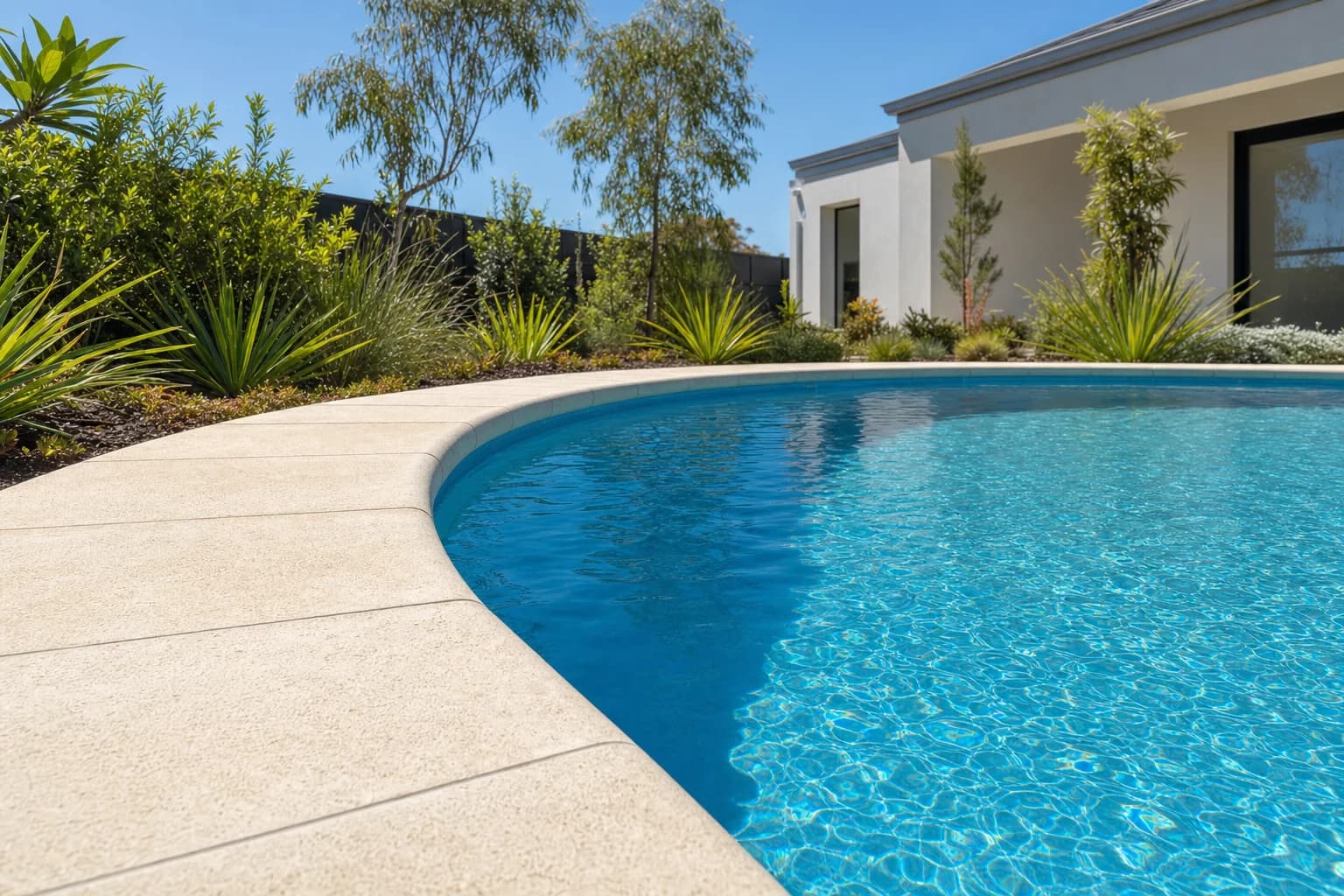
Pool coping is the edge that finishes a pool surround, and it's the part you sit on and see first. We cut and lay coping to the shape of the pool you already have, in travertine, porcelain, limestone or bluestone.
Send us your pool
A photo of the edge and a rough shape is enough to price it.
Coping and capping are the same thing under two names, so if you've been quoted for one and asked about the other, it's the same work.
We install it on new surrounds, replace it when it's moved, and lift and re-level runs that have dropped, anywhere between Two Rocks and Mandurah.
You can have it done on its own, with the paving behind it left alone, or laid together with a new surround. Either way it's one price for supply and lay.
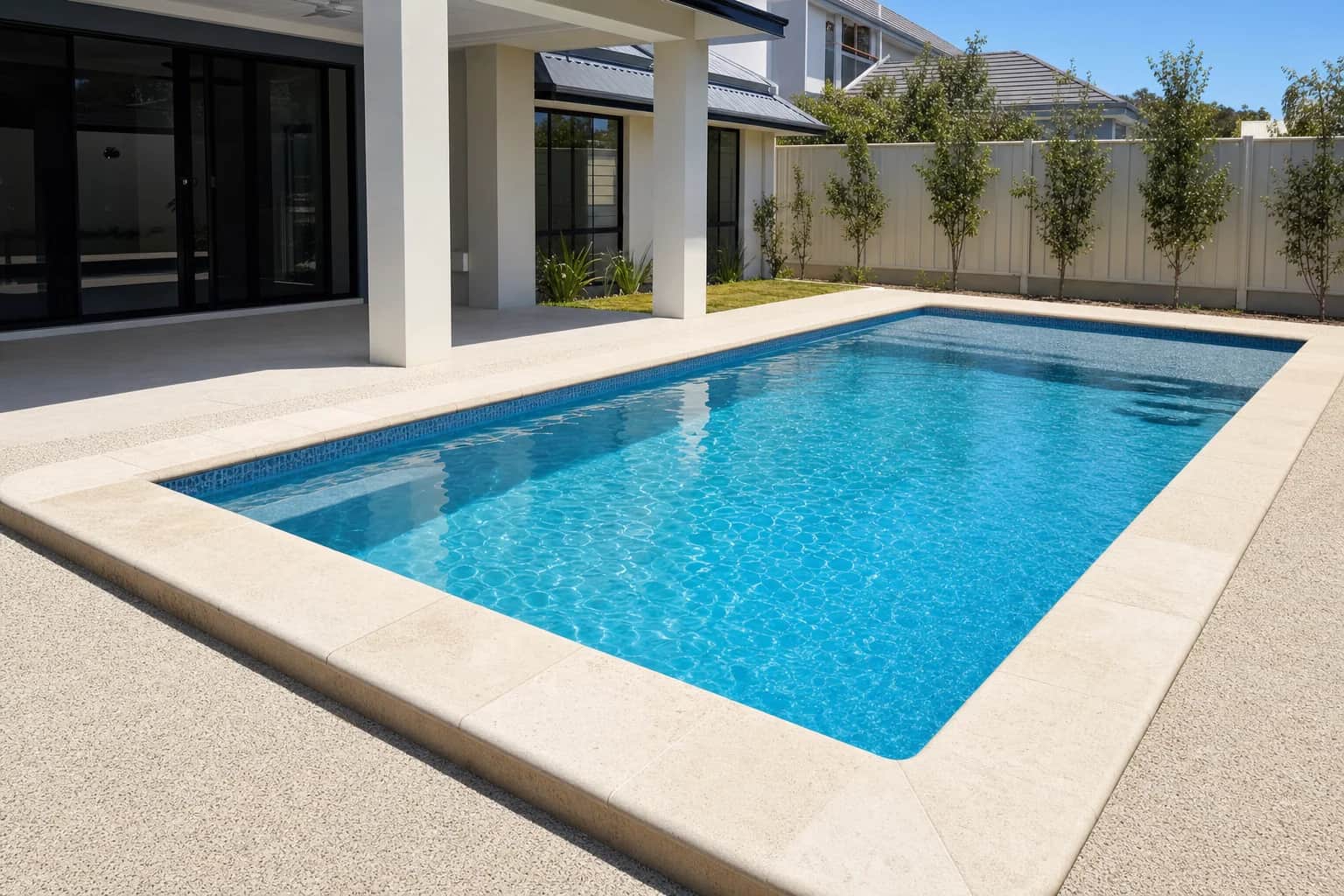
New coping
The full edge on a new or freshly rendered pool, cut to the shape and bedded in with the surround.
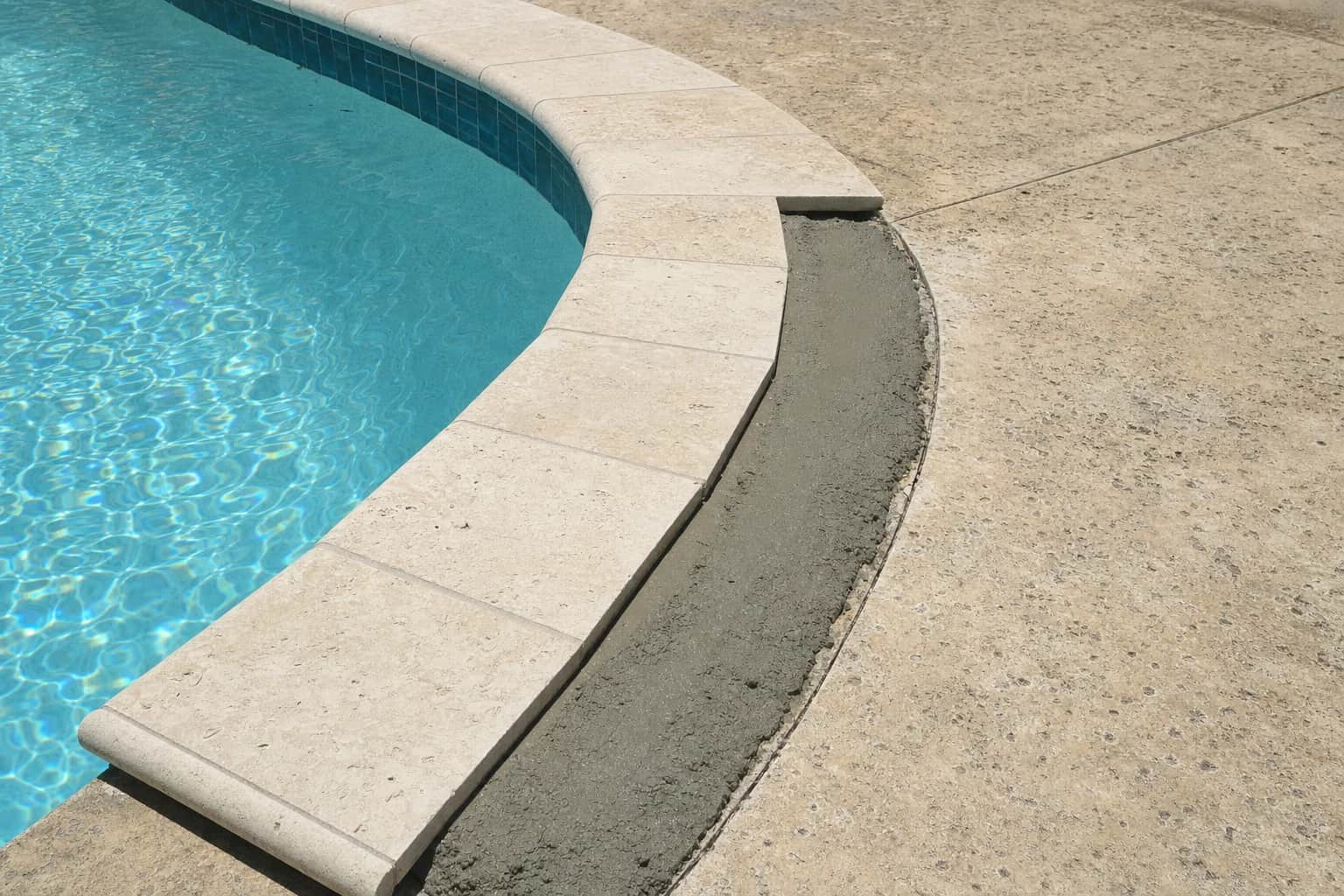
Replacement
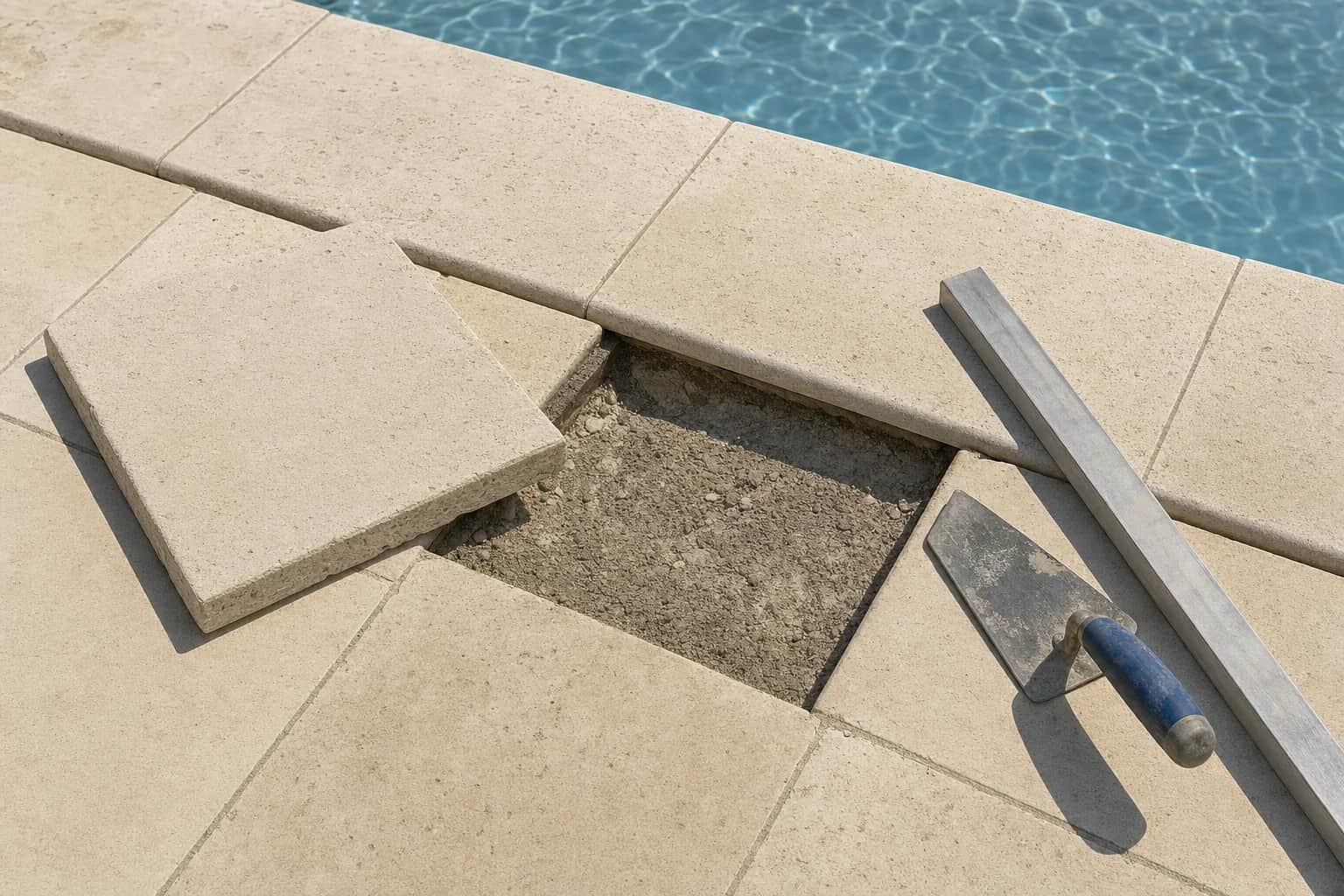
Lifting an edge that's moved, rebuilding the bed underneath it and laying new pieces. Matching an existing paver is the tricky part, and we'll tell you before we start whether we can.
Lift and re-level
Where the pieces are still good but the bed under them has dropped. Cheaper than replacing them, and often all a pool needs.
Takes a person's weight
The edge is a seat whether it was meant to be one or not, so we bed every piece into mortar right across its underside.
Drips clear of the pool
We set the overhang and the fall so splash-out leaves the stone instead of running back down the inside of the pool wall.
Stays cool underfoot
It gets walked on wet and barefoot in February, so we'll talk you through which materials stay coolest in the sun your pool gets.
Follows the pool
Perth pools are rarely rectangles, so on a curve we cut each piece to the shape and the joints stay even the whole way round.
Three profiles cover almost every pool we edge. The one you pick changes how the pool looks from the house and how the edge feels to hold on to.
A fully rounded front edge. The softest to hold and to sit on, and the most forgiving if the pool isn't perfectly true. It's the usual choice in travertine and limestone.
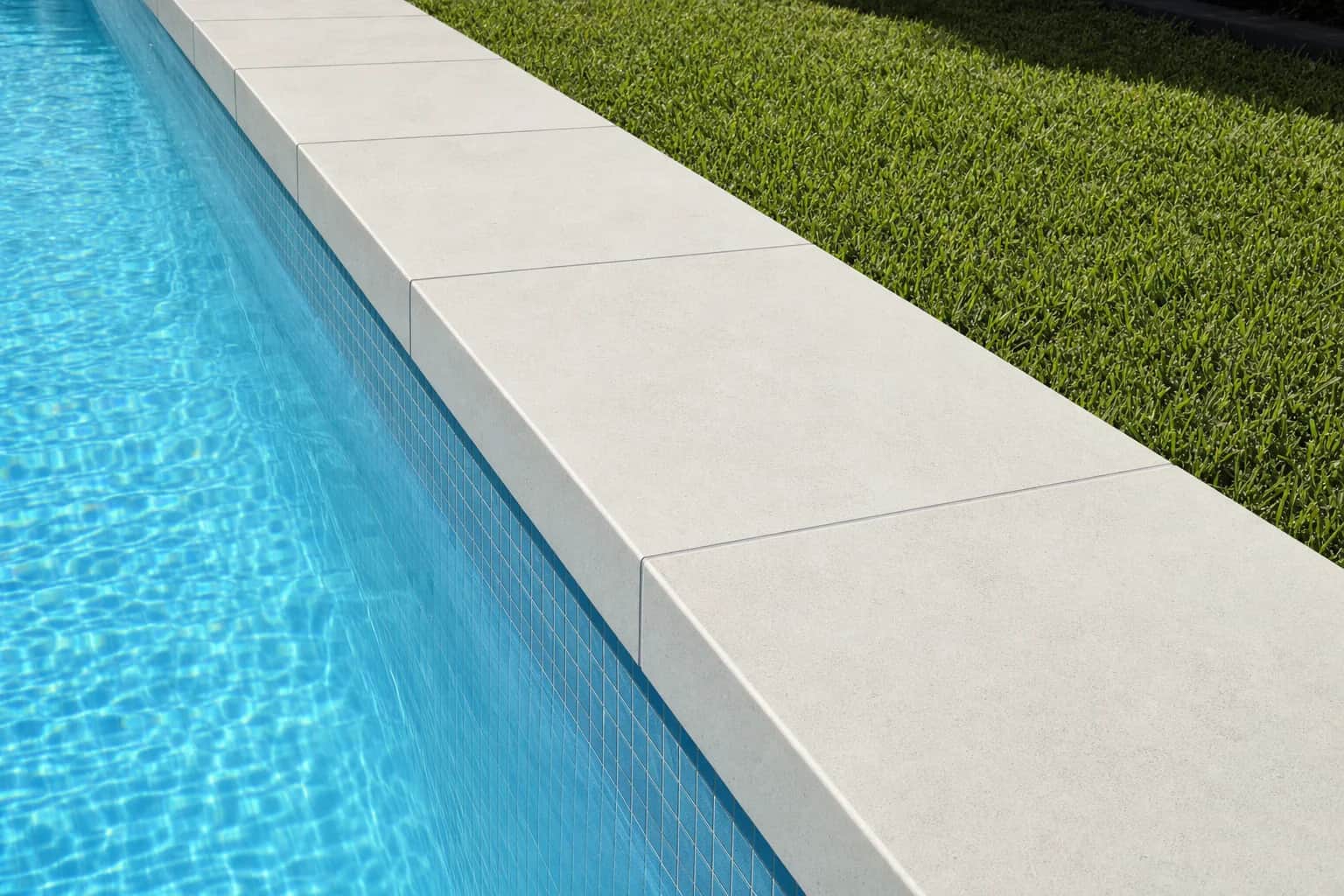
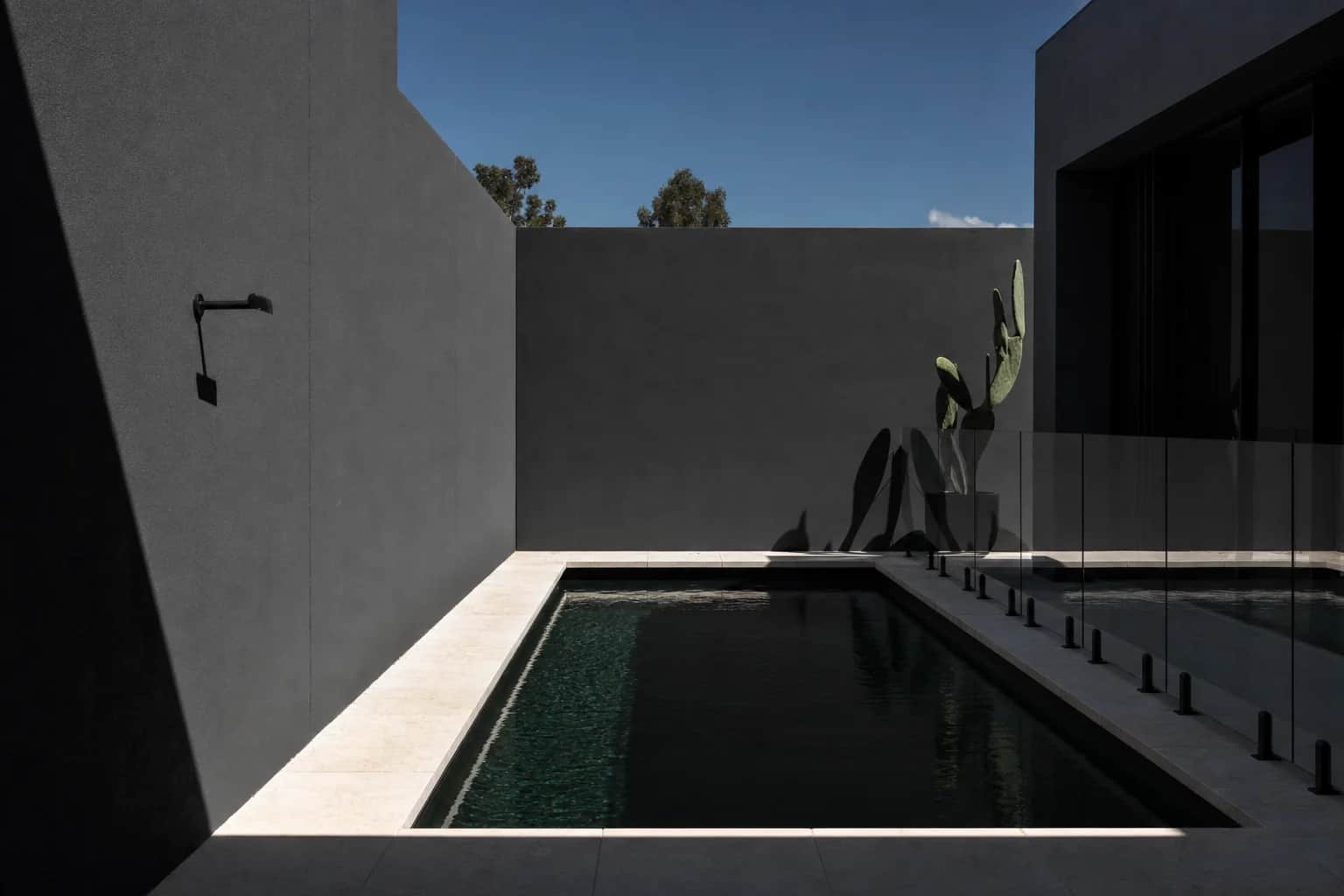
A crisp square front edge, usually in porcelain. It looks modern and suits a straight-sided lap pool, and it takes more care to lay because the level shows along the whole run.
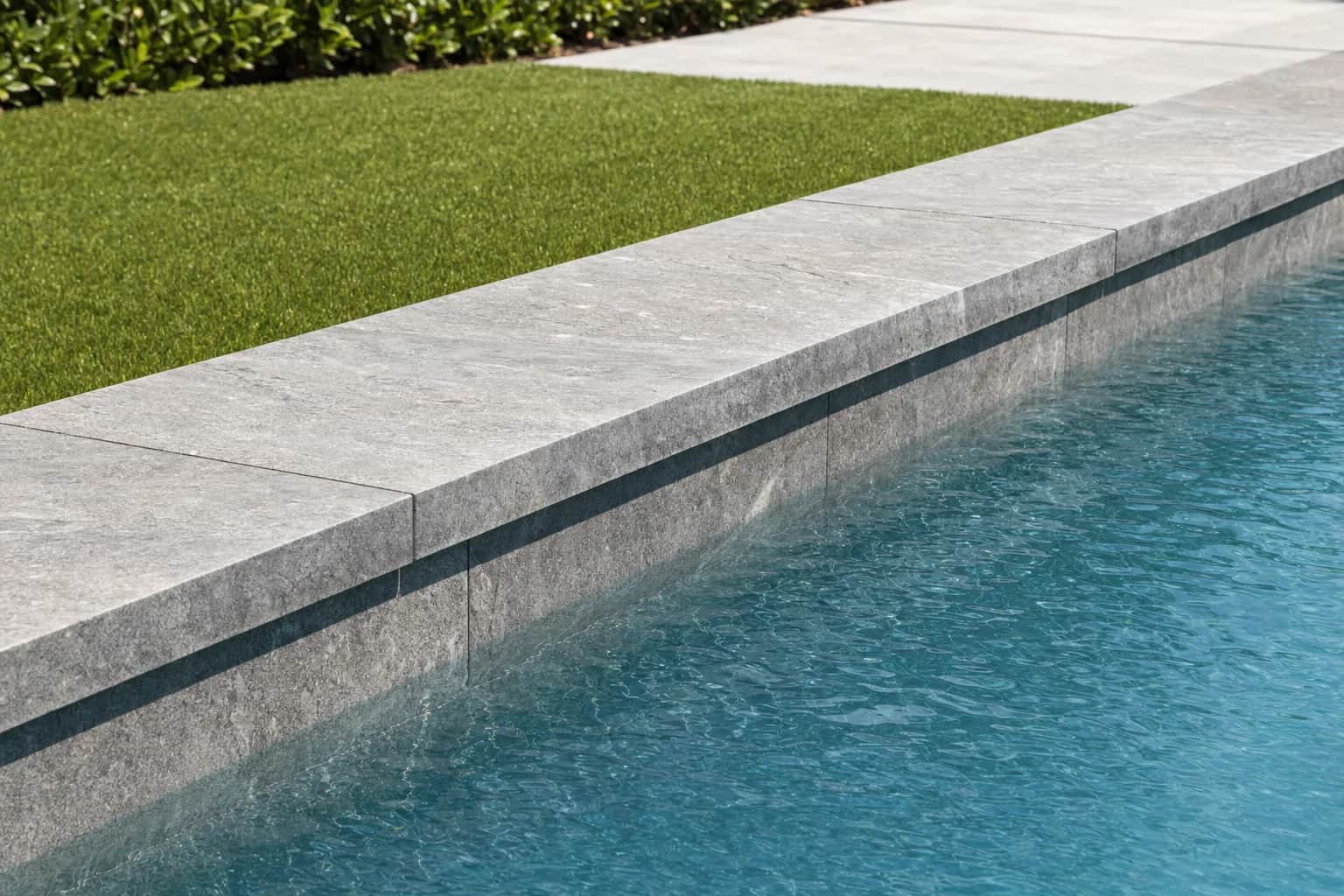
The stone turns down and carries on as a face on the pool wall, covering the shell and the waterline tile behind it. It costs the most of the three and it changes the look of a pool the most.
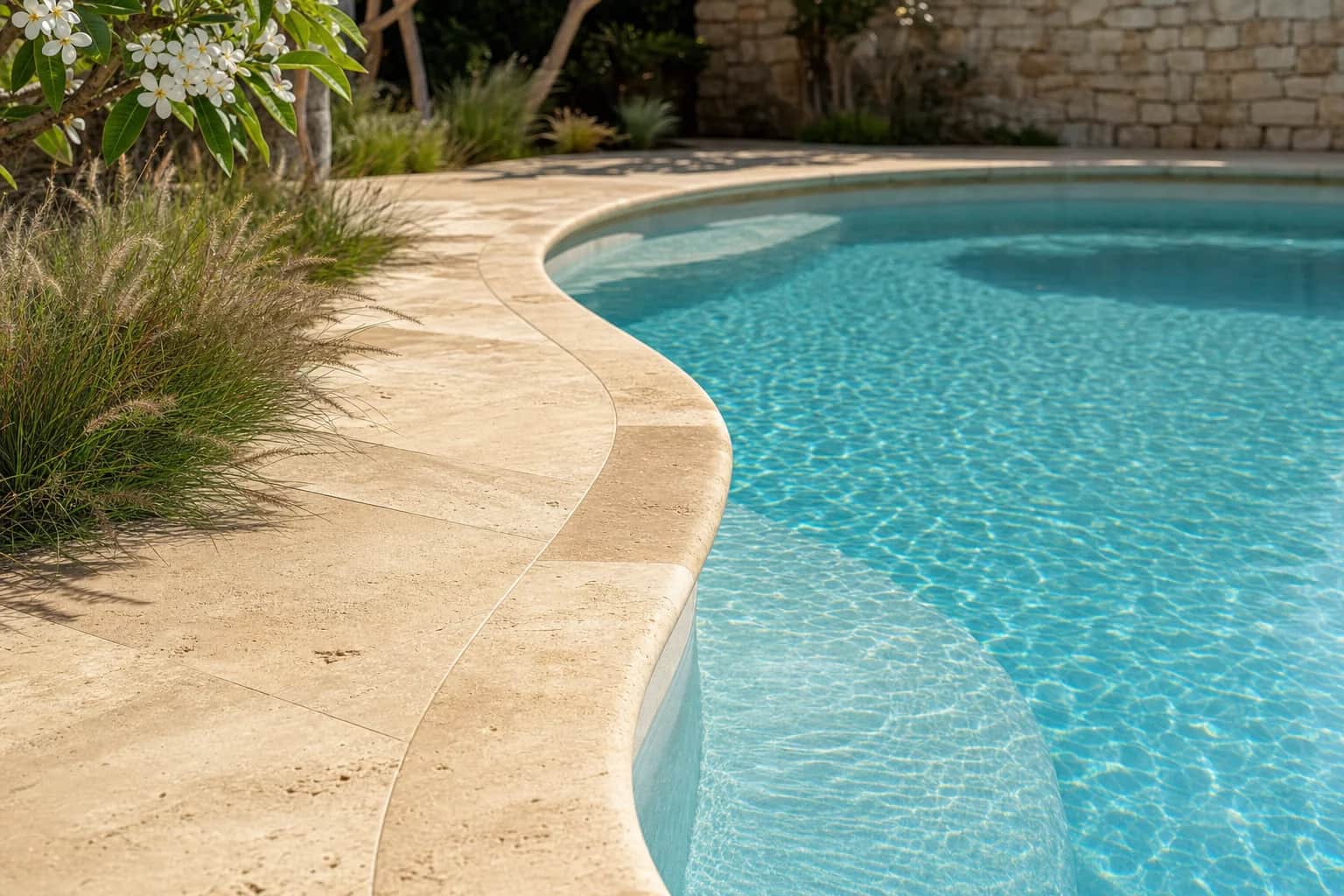
On a curved pool we measure each piece against the pool itself, cut it on the saw, and lay the whole curve out dry before anything is bedded down.
That way the joints stay the same width the whole way round, front to back, instead of opening into a wedge at the nose of every piece.
It's most of the time on a coping job, and it's the part you can see from the back door.
Sun, salt and bare feet matter as much as looks here. This is what we'd tell you standing at the pool.
| Material | Underfoot | With salt | What to know |
|---|---|---|---|
| Travertine | UnderfootCoolest underfoot of the natural stones | With saltHolds up well when it's laid wet and grouted solid | What to knowThe usual choice around Perth pools, and bullnose is easy to get. |
| Porcelain | UnderfootCool, and completely consistent | With saltEffectively unaffected | What to knowHolds a crisp square edge, and it rewards careful laying because the level shows. |
| Limestone | UnderfootCool underfoot, with a soft tone | With saltPorous, so the jointing has to be right | What to knowSoft-toned and suits Perth homes. It marks more easily than travertine. |
| Bluestone | UnderfootGets hot in full sun | With saltHard wearing, though it can spot | What to knowDark and dramatic against a dark interior. We'll tell you where it works and where it won't. |
| Concrete | UnderfootDepends on the colour you pick | With saltHard wearing, and easy to replace | What to knowThe most affordable way to edge a pool, and it comes in a wide range of finishes. |
Coping usually moves before the paving behind it does. If two of these sound familiar, it's worth a look.
Coping can usually be lifted and relaid on its own, without touching the paving behind it. It's a smaller job than most people expect.
A photo of the edge, a rough shape and whether it's salt or chlorine is enough to start. If the coping can be saved rather than replaced, we'll tell you.