
Herringbone
The strongest pattern for a driveway, because no joint runs straight in the direction a wheel pushes. It's the traditional choice for clay and concrete pavers, and it means more cutting at every edge.
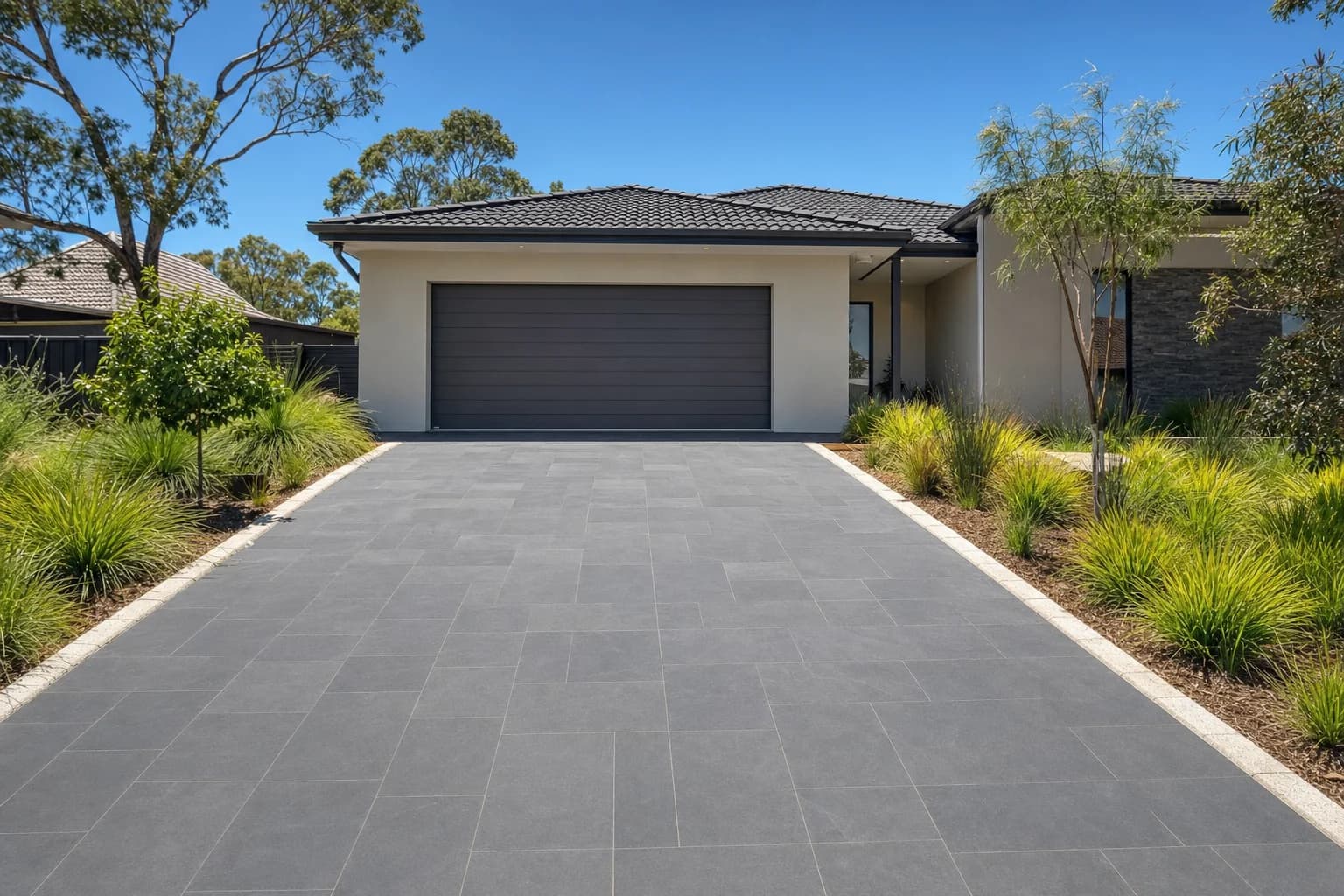
Driveway paving across Perth, laid wet on a full mortar bed over a base built to carry a car every day for years. We lay porcelain, natural stone, clay and concrete pavers, and we'll give you a proper price before we start.
Send us your driveway
A photo from the street and a rough size is enough to price it.
We pave new driveways, lift and relay driveways that have rutted or sunk, and lay the crossover out to the kerb as part of the same job.
Anywhere between Two Rocks and Mandurah, and the person who quotes it is the person who lays it.
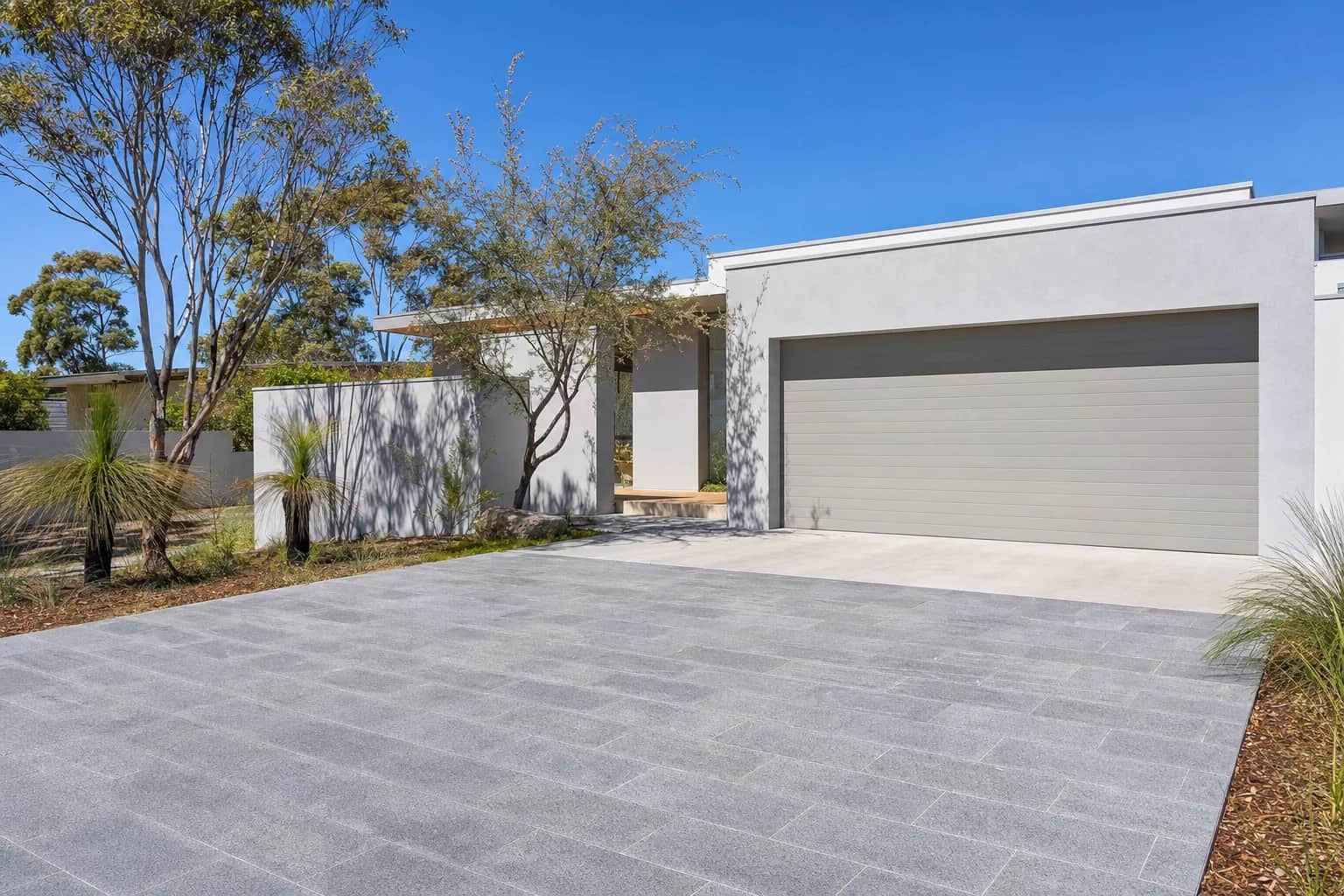
A new driveway
From the garage apron out to the kerb. We settle the base, the drainage, the pattern and the edges with you before anything goes down.
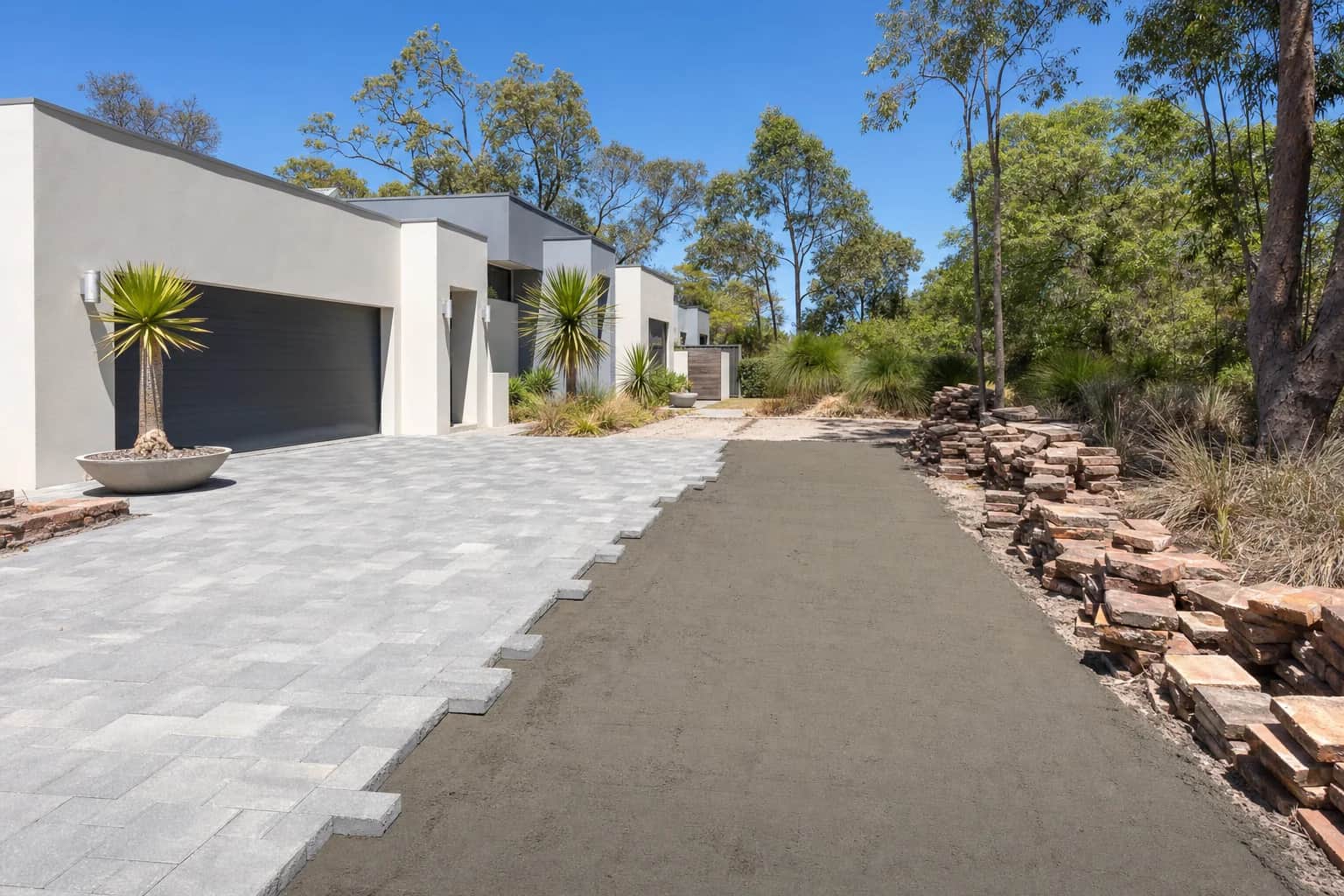
Relaying an existing driveway
Lifting a driveway that's rutted, sunk or spread, rebuilding what's underneath, and laying it again. Your existing pavers can often come back down.
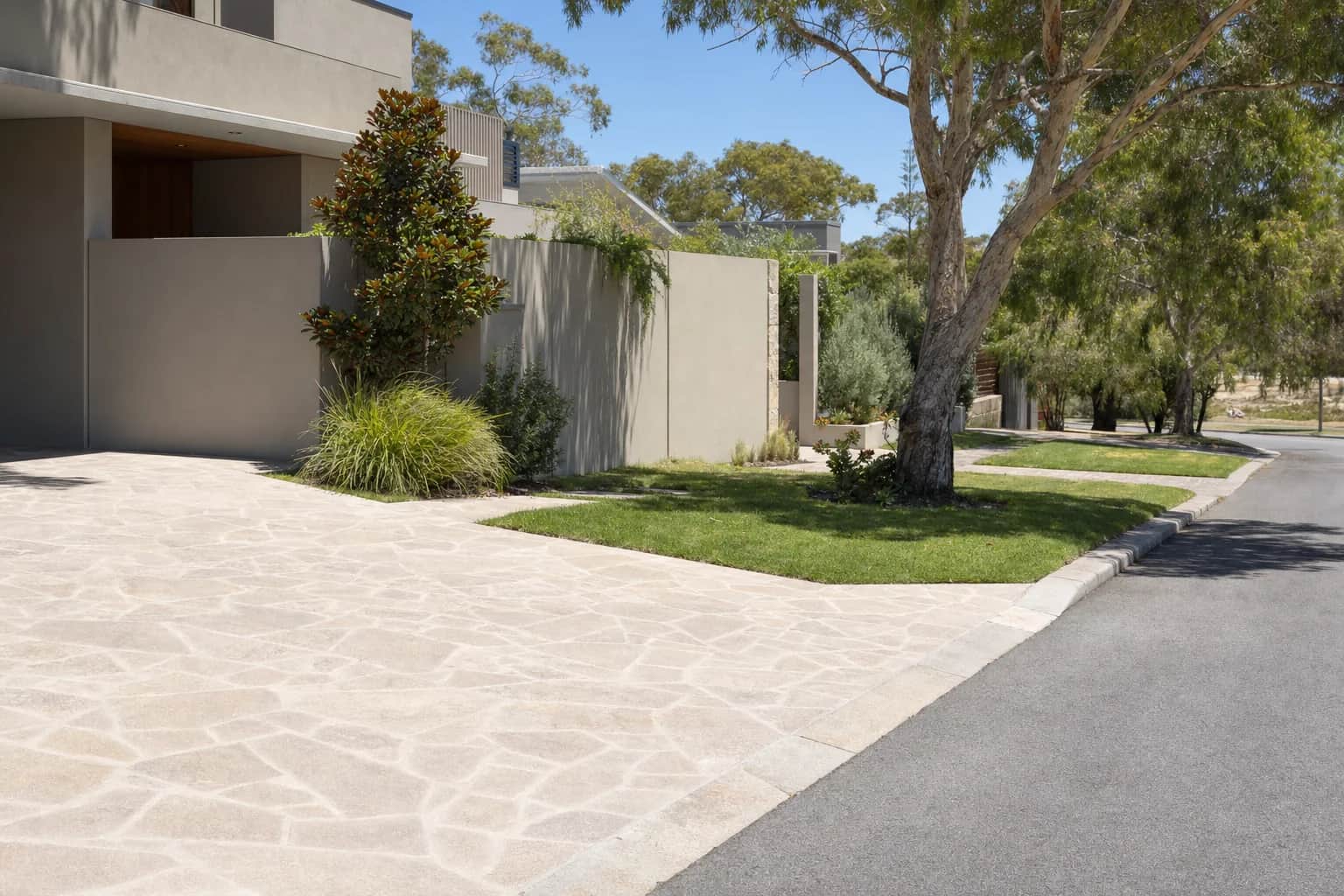
The crossover
The strip between your boundary and the kerb belongs to the council and gets built to their spec. We lay it with the driveway so the two match.
A car in the same spot every night
Parking in one place puts the same load on the same square metre thousands of times, so we compact the base in layers rather than in one go.
Turning and braking
Wheels scuff sideways at the garage door and at the kerb, so we pick a pattern that locks the pavers against each other.
Its own stormwater
In Perth stormwater has to stay on the property, so we set the falls to send it somewhere it can go, well away from the garage.
Full pavers where you drive
We set the pattern out from the centre with a string line, so the cut pieces land at the edges rather than in the wheel tracks.
Perth is sand, and sand makes a good base once it's confined and properly compacted. Here's the order we build it in, from the ground up.
Topsoil, roots and loose fill come out. What's left gets compacted in layers and checked before anything goes on top of it.
Laid and compacted in lifts. This is the layer that spreads the weight of the car out across the ground underneath.
We work out where the water needs to go before we start, because the fall has to be built in rather than added later.
The whole underside of each paver is supported, so there's no gap underneath and nothing drops when the ground settles.
We grout the joints solid, so sand can't wash out, ants can't get in, and the surface holds together as one piece.
Two driveways can look the same on the day they're finished and be years apart in how long they stay flat. That list is where the difference is.
The pattern is more than a look. On a driveway it decides whether the surface holds together as one interlocked sheet or as a lot of separate pieces.
The strongest pattern for a driveway, because no joint runs straight in the direction a wheel pushes. It's the traditional choice for clay and concrete pavers, and it means more cutting at every edge.
Rows offset by half a paver, the same as a brick wall. Quick, familiar and fine on a driveway, as long as the long joints run across the traffic rather than along it.
Mixed sizes in random rows. It suits natural stone and breaks up a wide driveway nicely, and it takes the most setting out of the four.
Big porcelain or stone pieces with very few joints, and the calmest looking of the four. On a driveway the paver has to be rated for vehicles and thick enough for it, so it needs to be an outdoor paver rather than a tile.
The strip between your front boundary and the road is verge, and it's council land. The driveway that crosses it is called a crossover, and every Perth council wants it approved before it's built.
Councils publish their own crossover spec, and most contribute towards the cost of a property's first paved or concrete crossover when it's built to it. The rules differ from council to council, so the answer for your street is the one on your own council's site.
In practice that means the crossover is a separate approval on the same job, and it's worth sorting before the driveway is priced, because the council sets the finish and the levels at the kerb.
We lay the crossover to your council's spec and match it to the driveway behind it.
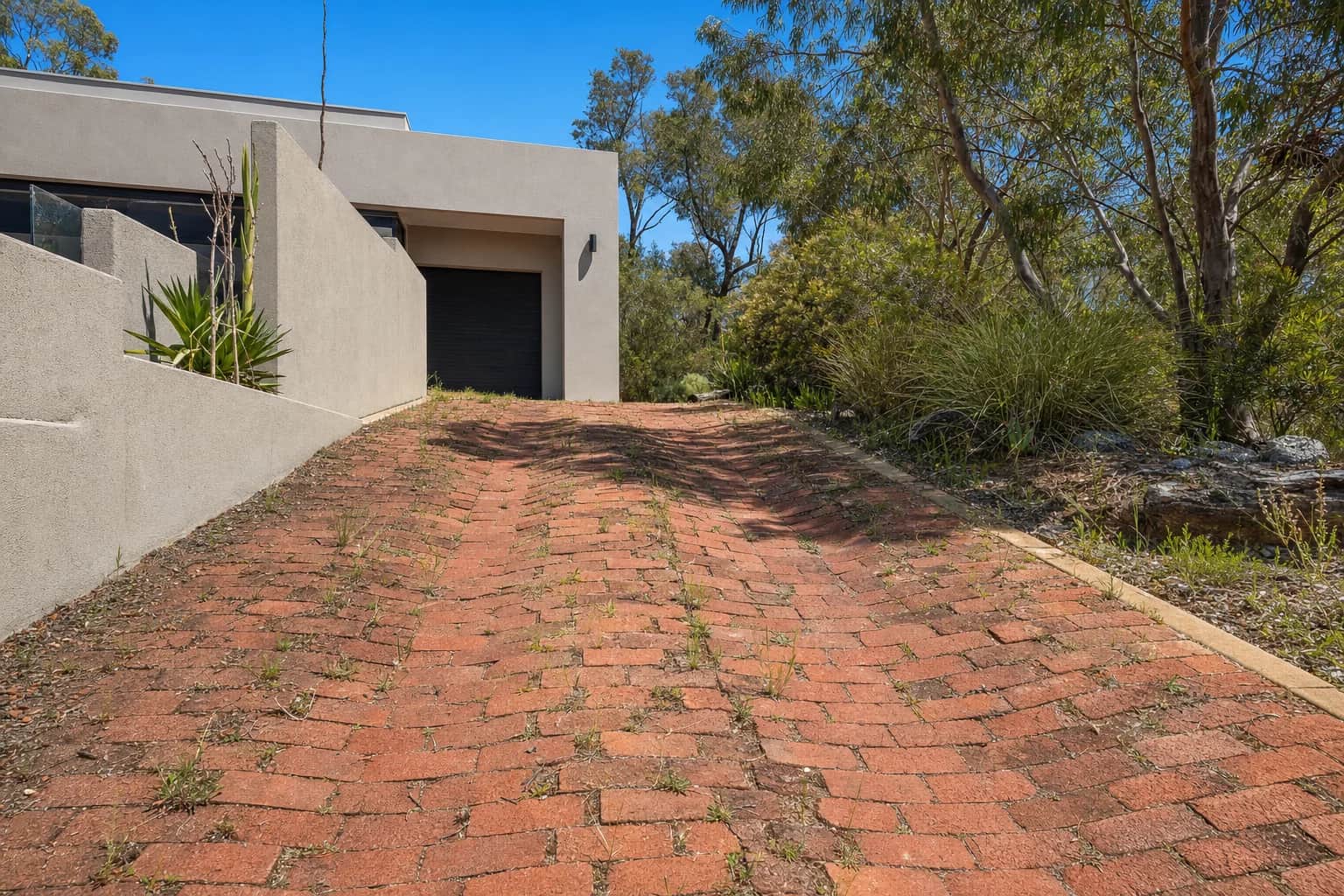
Driveways move from the bottom up and it shows at the surface, usually a few summers in. If two of these sound familiar, it's worth a look.
A rutted driveway is almost never the pavers. They're usually in good condition, sitting on a base that's moved, which is why re-sanding the joints and pressure washing it doesn't hold.
If yours is doing any of that, we can lift it and relay it on a rebuilt base.
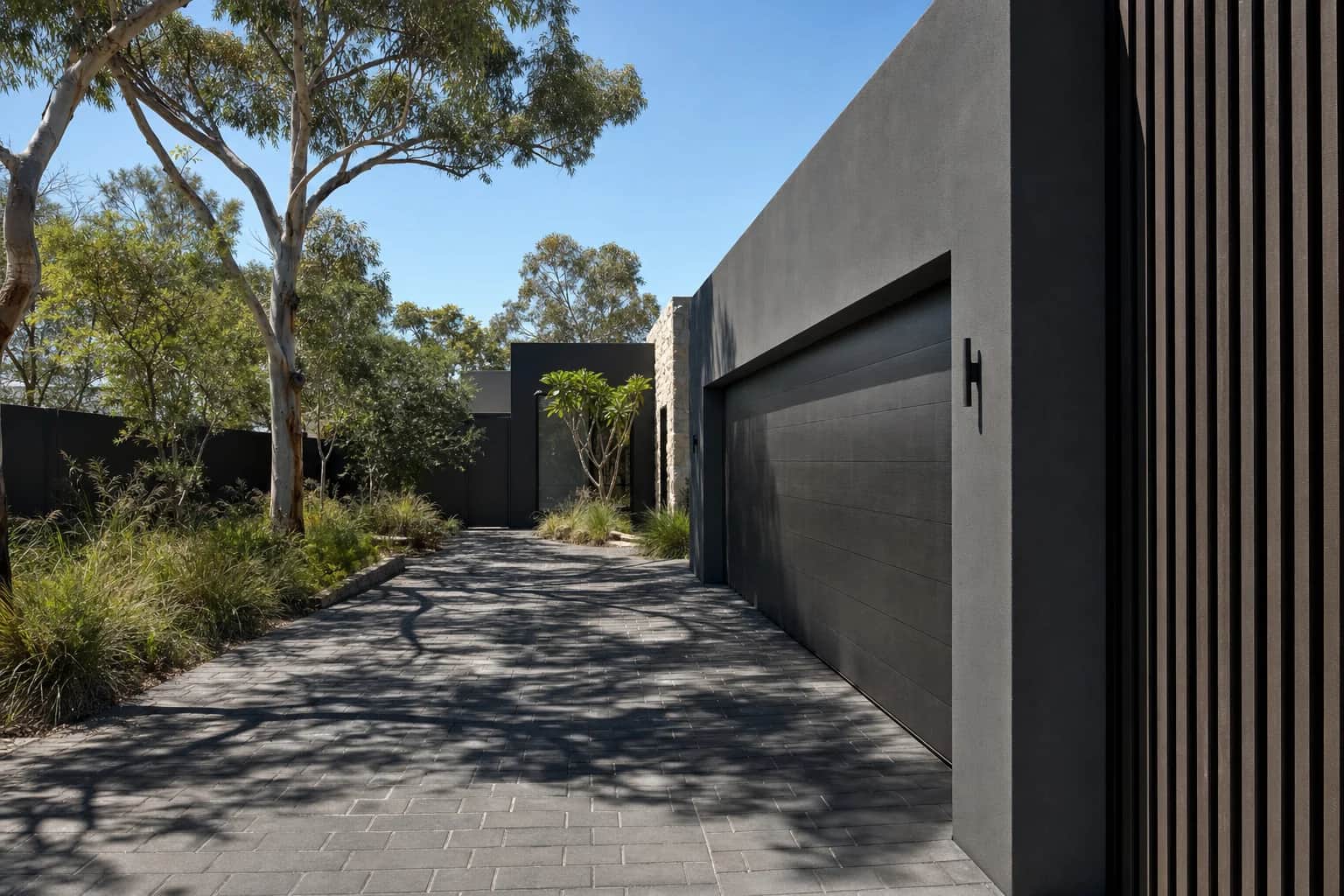
A photo from the street, a rough length and width, and whether anything is coming out first. If your existing pavers can go back down, we'll tell you.