Paving repairs Perth
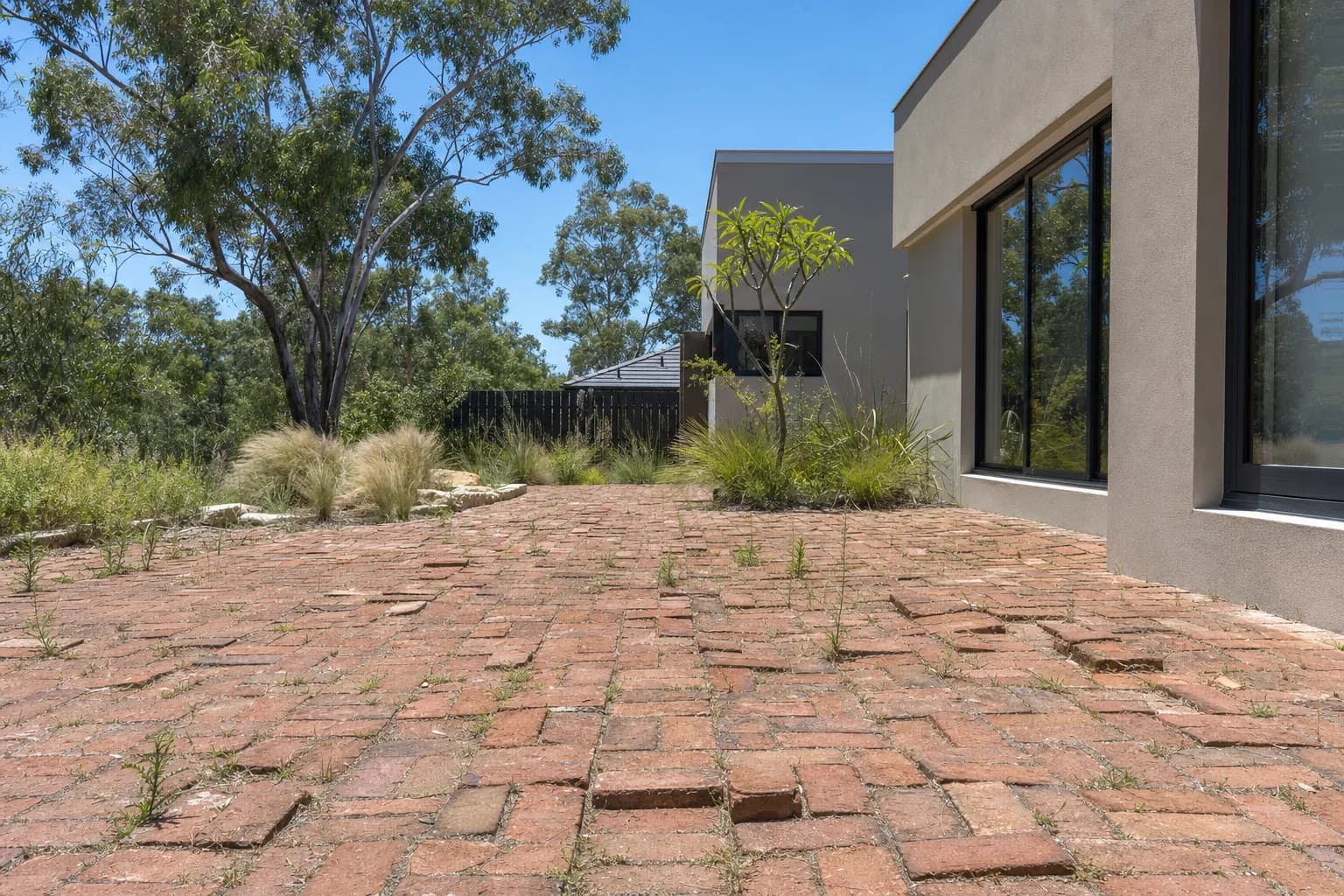
Paving repairs anywhere in Perth, on paving that's sunk, started to rock or opened at the joints. We lift it, fix the base underneath, and lay it back down on a full mortar bed. It's about half of what we do.
- About half of what we do
- Your own pavers lifted, cleaned and relaid
- The base fixed, not just the surface
Send us your paving
A photo of the worst bit tells us most of it.
Lifted, corrected underneath, and laid back down wet
Three versions of the same job, depending on how much has moved and whether your pavers are worth keeping.
We work between Two Rocks and Mandurah, and we're just as happy relaying paving we didn't lay as paving we did.
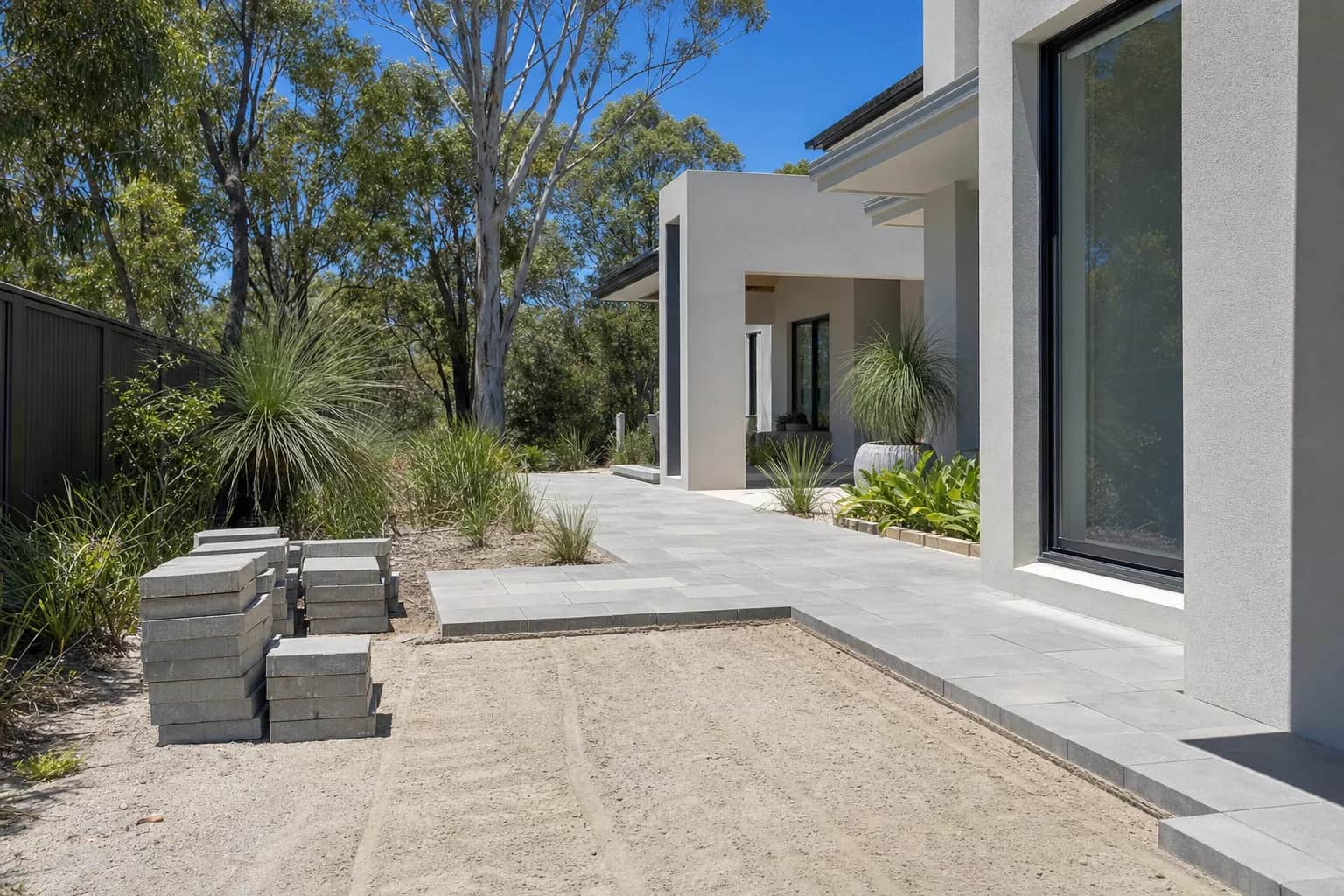
Full relay
The whole area comes up, we rebuild and compact the base, and it goes back down on a full mortar bed.
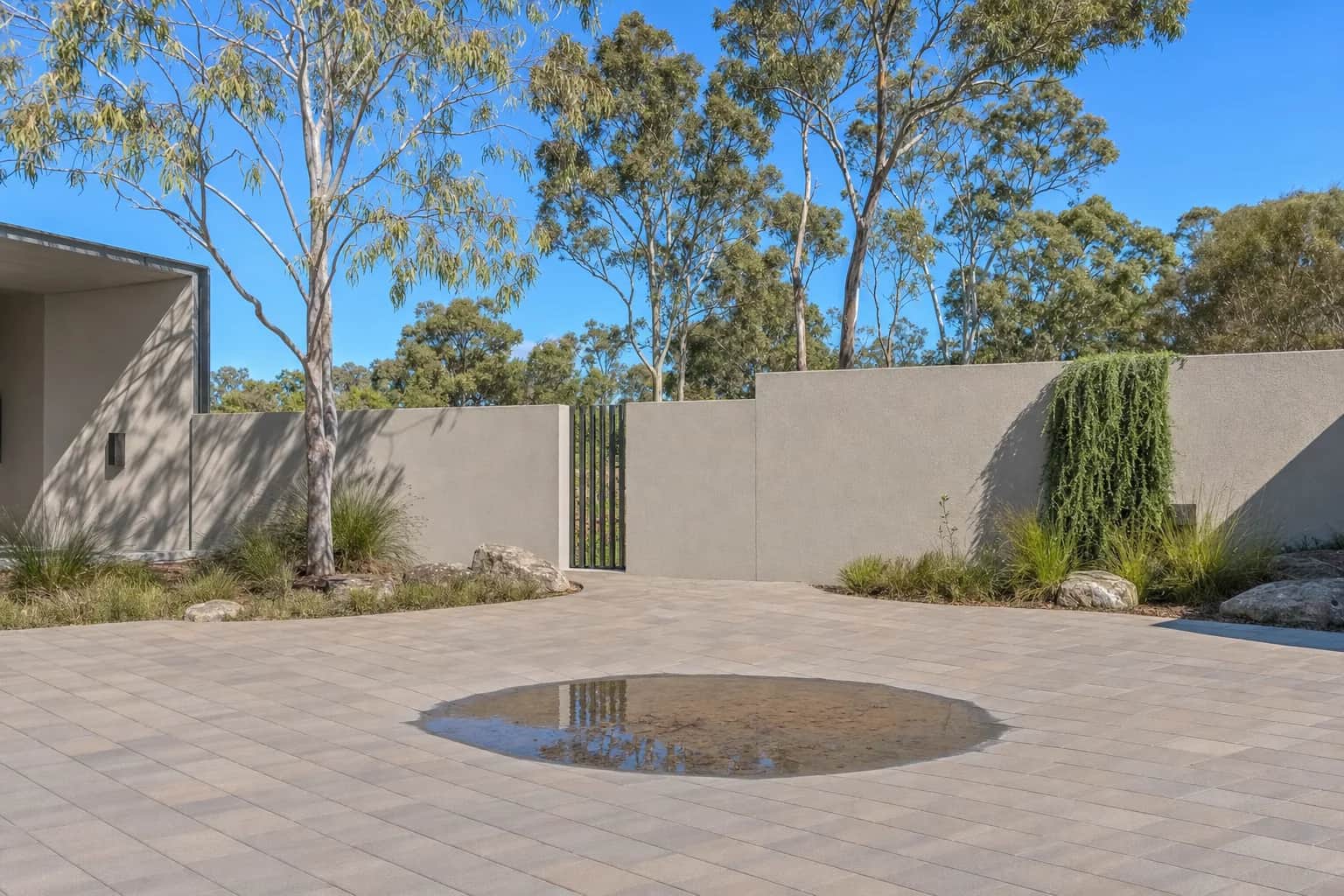
Lift and re-level a section
Where one area has dropped and the rest is still good. Cheaper than a full relay, and the right answer more often than people expect.
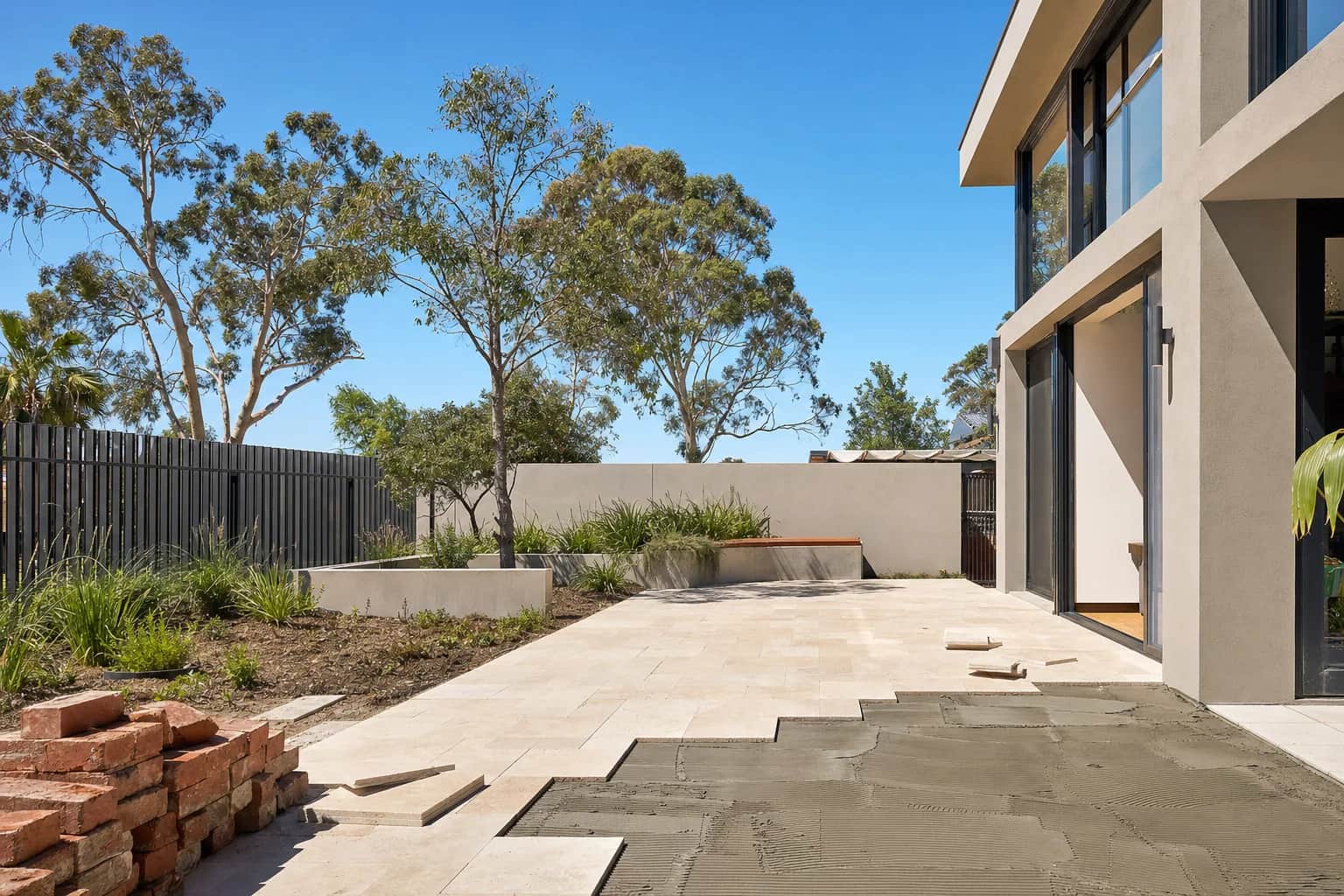
Take up and replace
When the pavers are past it, or you'd like something different. New material onto a base we've rebuilt from the ground up.
What it's doing, and what that tells us
Paving moves in a handful of ways, and each one points at a different layer underneath. Here's what we look for.
- One paver rocks or clicks underfoot
- There's a gap under it. Either the bed was never full underneath, or the sand below has washed out.
- A whole area has dished, and holds a puddle
- The base has settled unevenly under load, or it wasn't compacted to start with. Your pavers are usually still fine.
- The edges have crept outwards and the joints have opened
- There's nothing holding the edge in. Paving laid on sand spreads sideways unless something restrains it.
- Joints are empty, weedy or full of ants
- The sand in the joints has washed out. Once the joints are open, the bedding sand below starts going too, and that's what causes the rocking.
- One line of pavers has lifted in a ridge
- Usually a tree root. Sometimes a service trench that was backfilled loose and has been driven over since.
- It has sunk right at the edge of the house or the garage
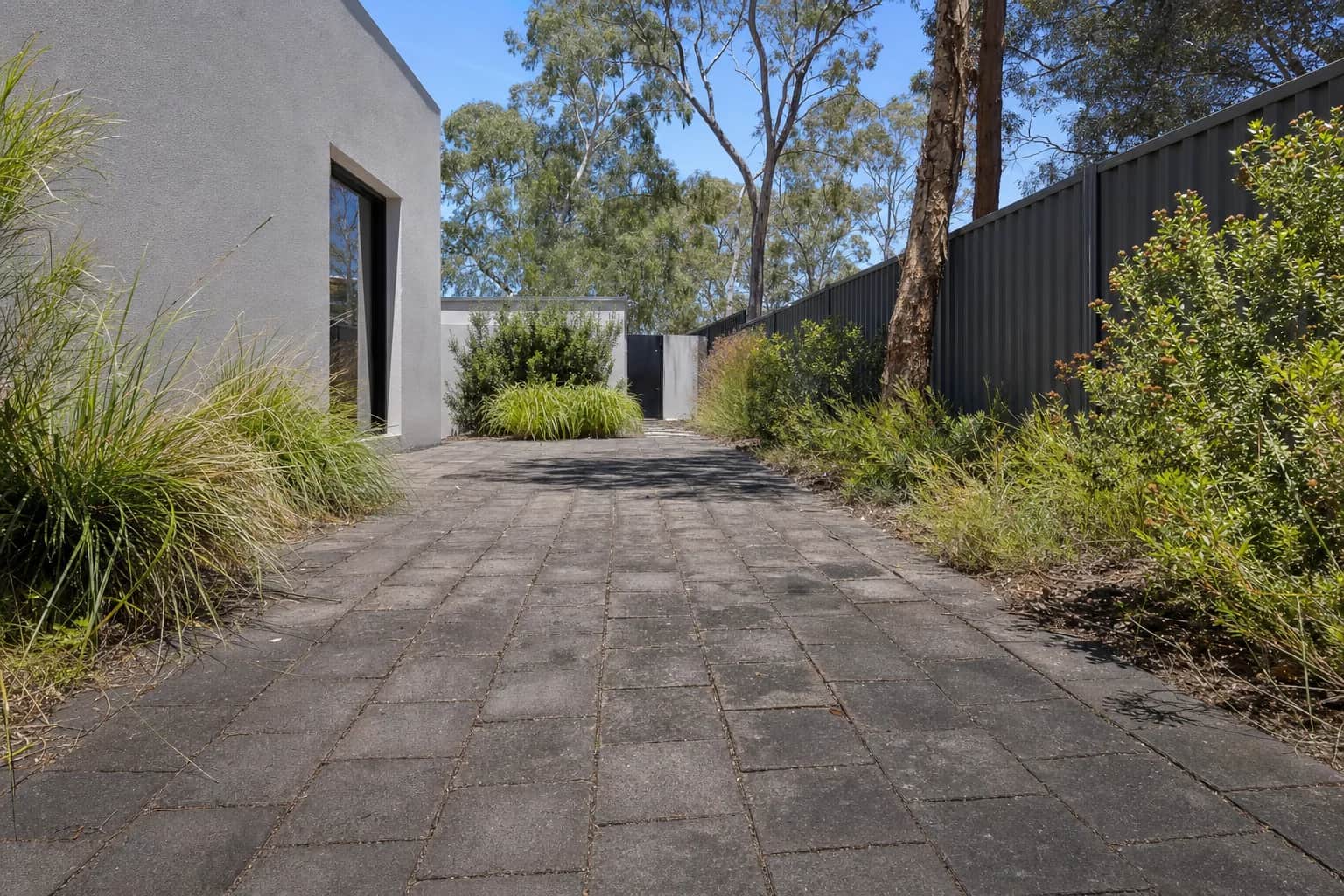
- The backfill against the wall settled. It's the most common spot for paving to drop on a Perth block.
Can it just be patched?
It can, and it's cheaper on the day. Lift the sunken pavers, sand underneath, tamp them back down, and the area is flat again by the afternoon.
What it doesn't do is change why they dropped. The base that settled once will settle again, so a patch usually buys a season or two before the same dip comes back in the same spot.
That's why we don't quote patch repairs. If the base is the problem we'll say so and quote the relay. If only one area has moved and the rest is still good, we'll quote that area and leave the rest alone. Either way you'll know which it is before there's a price on it.
How we relay a paved area
Three to five days on a typical backyard, and most of that is the first three steps.
- 01
Lift and stack
The pavers come up by hand and get stacked where we can sort them. It's also when we find out how much of the base we can keep.
- 02
Strip the old bed
All the old bedding sand comes out, so the new bed goes onto the base itself rather than onto something that's already moved.
- 03
Correct and compact the base
We dig out the soft spots and make them up, compact the whole base in layers, and reset the falls so water drains away properly.
- 04
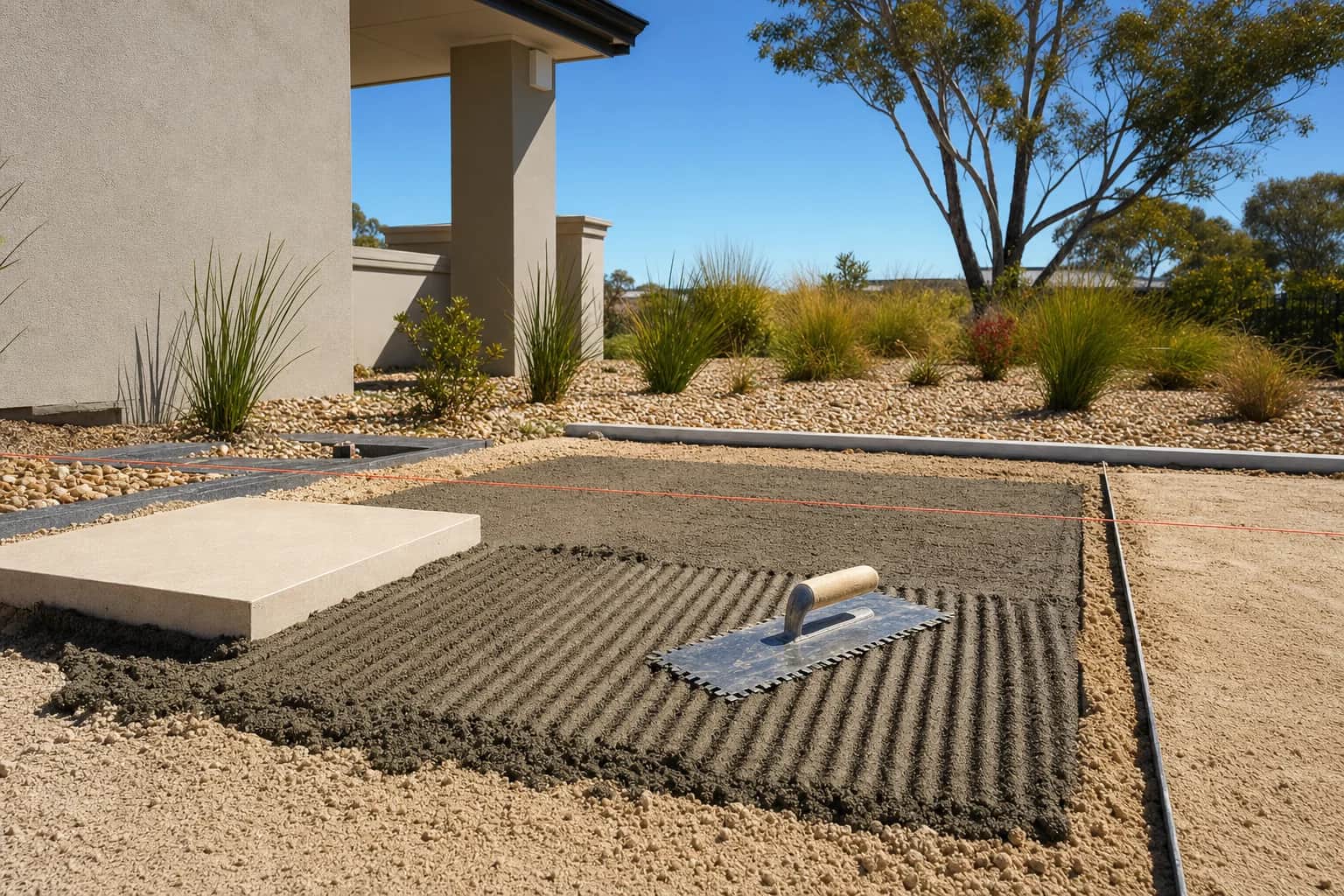
Lay back down, wet
Full mortar bed under every paver, so the whole underside is supported and there's nothing left to drop.
- 05
Grout and finish
Joints filled solid so sand can't wash out and ants can't get in, and the surface holds together as one piece.
Do your pavers come back down?
Often, and it makes a real difference to the price. What decides it is the material and how they were laid, not how old they are.
Usually yes
Clay and concrete pavers off a sand bed. They lift clean and brush off, and losing a few at the edges is normal and easy to make up.
Sometimes
Natural stone off a sand bed. Travertine and limestone chip at the corners coming up, so expect to lose some and to need a few replacements that won't quite match.
Rarely
Anything already bedded in mortar or glued to a slab. Getting it off intact costs more than the pavers are worth, and porcelain in particular tends to come up in pieces.
We'll tell you which of the three you've got before the job starts, and we'll say so if reusing them is going to cost more in labour than replacing them.
Paving repair questions
Send us a photo of the worst bit
A photo of the sunken section, one of the whole area, and roughly how big it is. If it only needs one area lifted rather than the lot, we'll tell you.