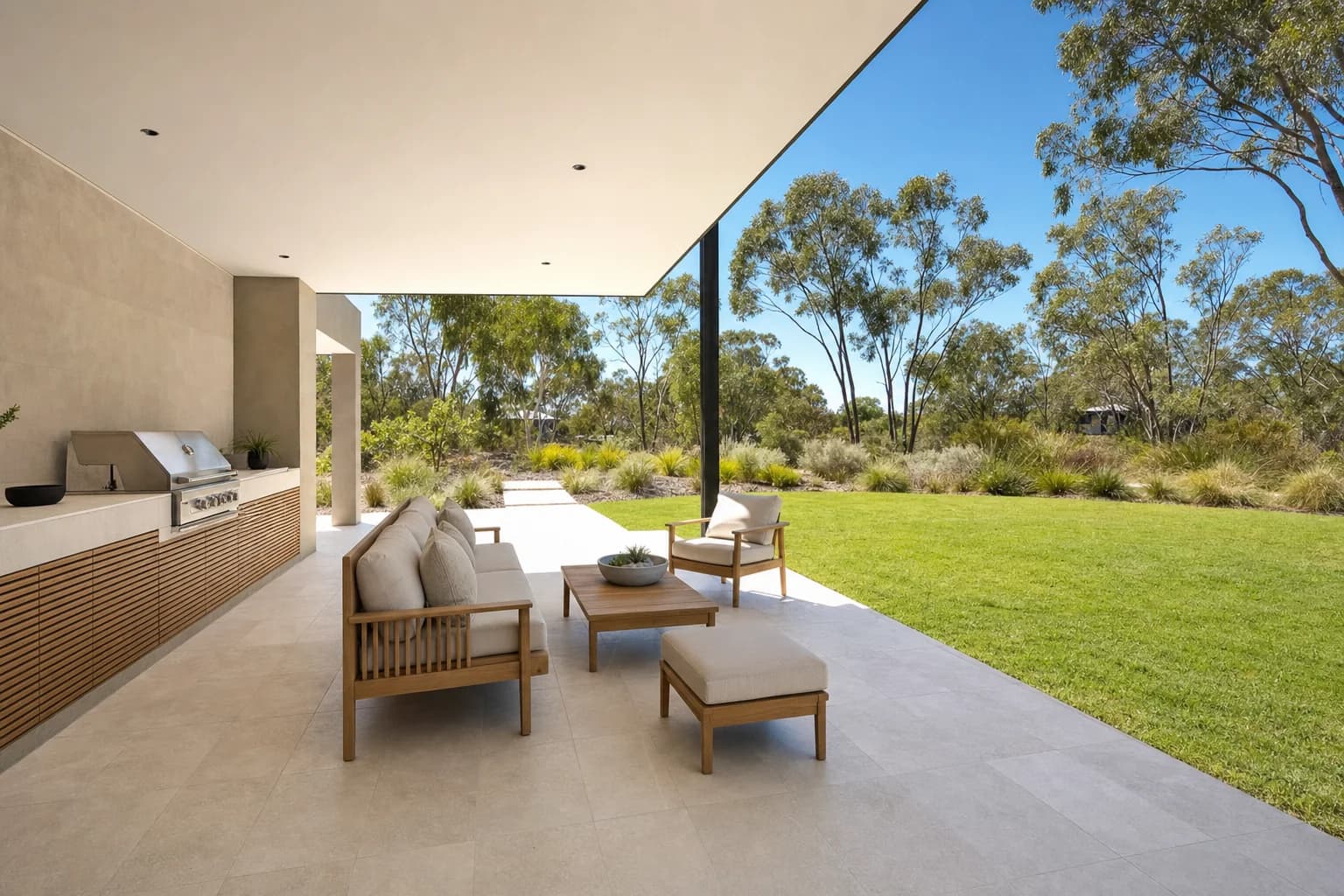
Alfresco paving Perth
Alfresco paving across Perth, laid wet on a full mortar bed and run level with the room it opens off. We set the threshold and the drainage so the floor carries straight out through the door, and we'll give you a proper price before we start.
- Level with the floor inside the house
- Drainage set so water runs away from the house
- Slip rated for wet feet, to AS 4586
Send us your alfresco
A photo from inside looking out is the useful one.
Under the roof, out in the sun, and the join between them
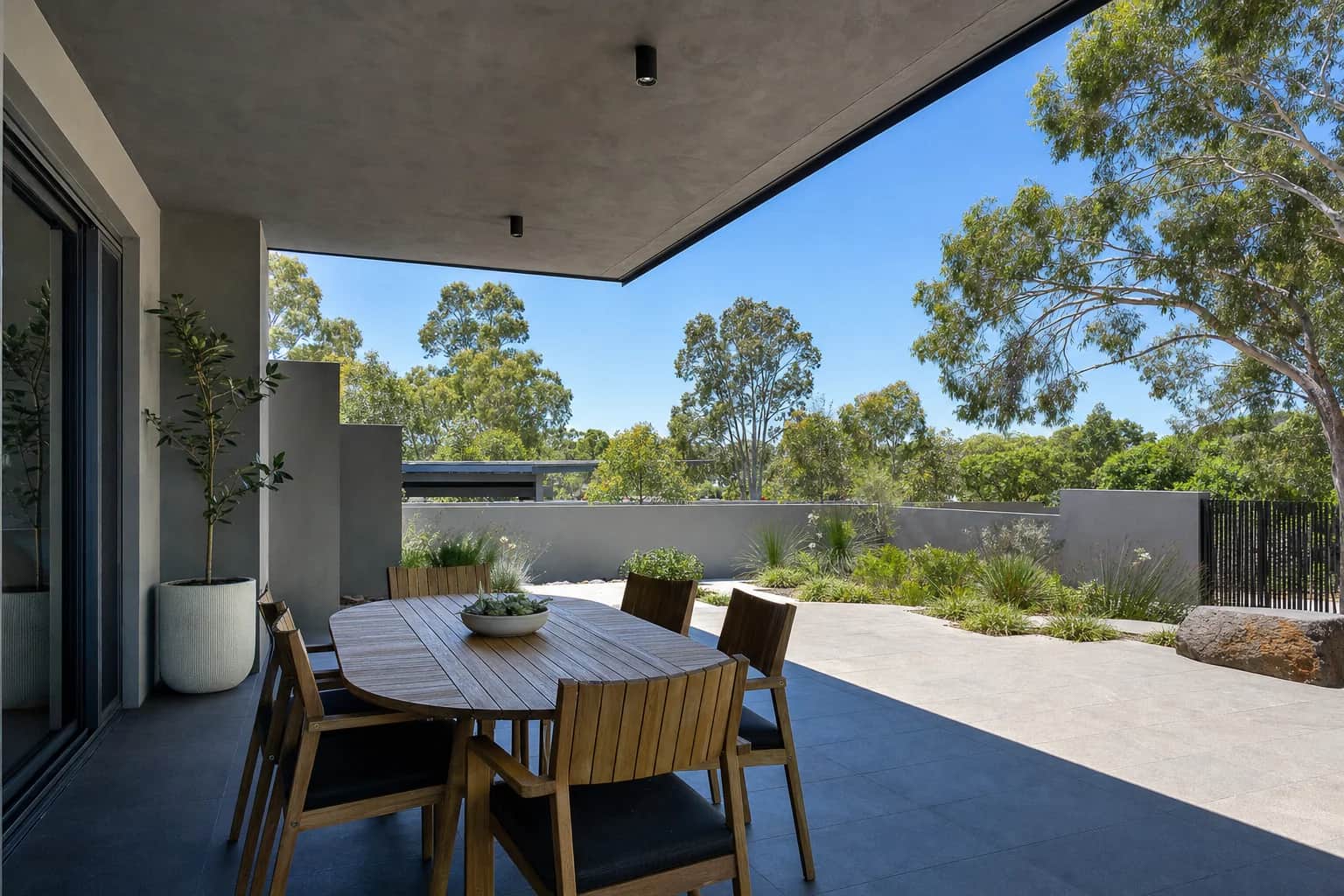
We pave alfrescos, courtyards and patios, and we carry the floor out through the door so the alfresco feels like part of the room.
New builds and existing homes, anywhere between Two Rocks and Mandurah.
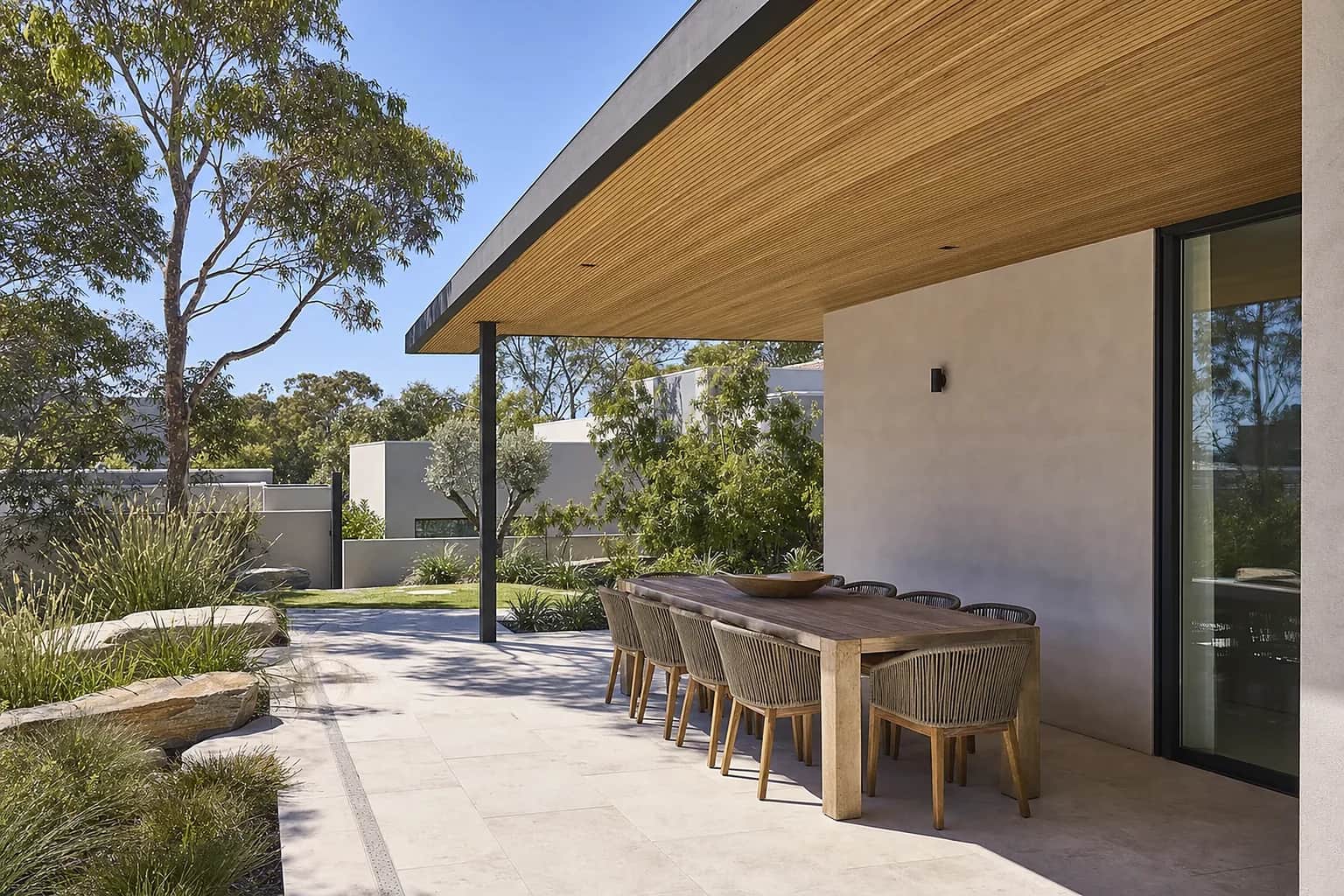
Under the roof
The sheltered part, where the paving is doing the job of a floor. Getting it flat matters more here than anywhere else outside, because that's where the furniture goes.
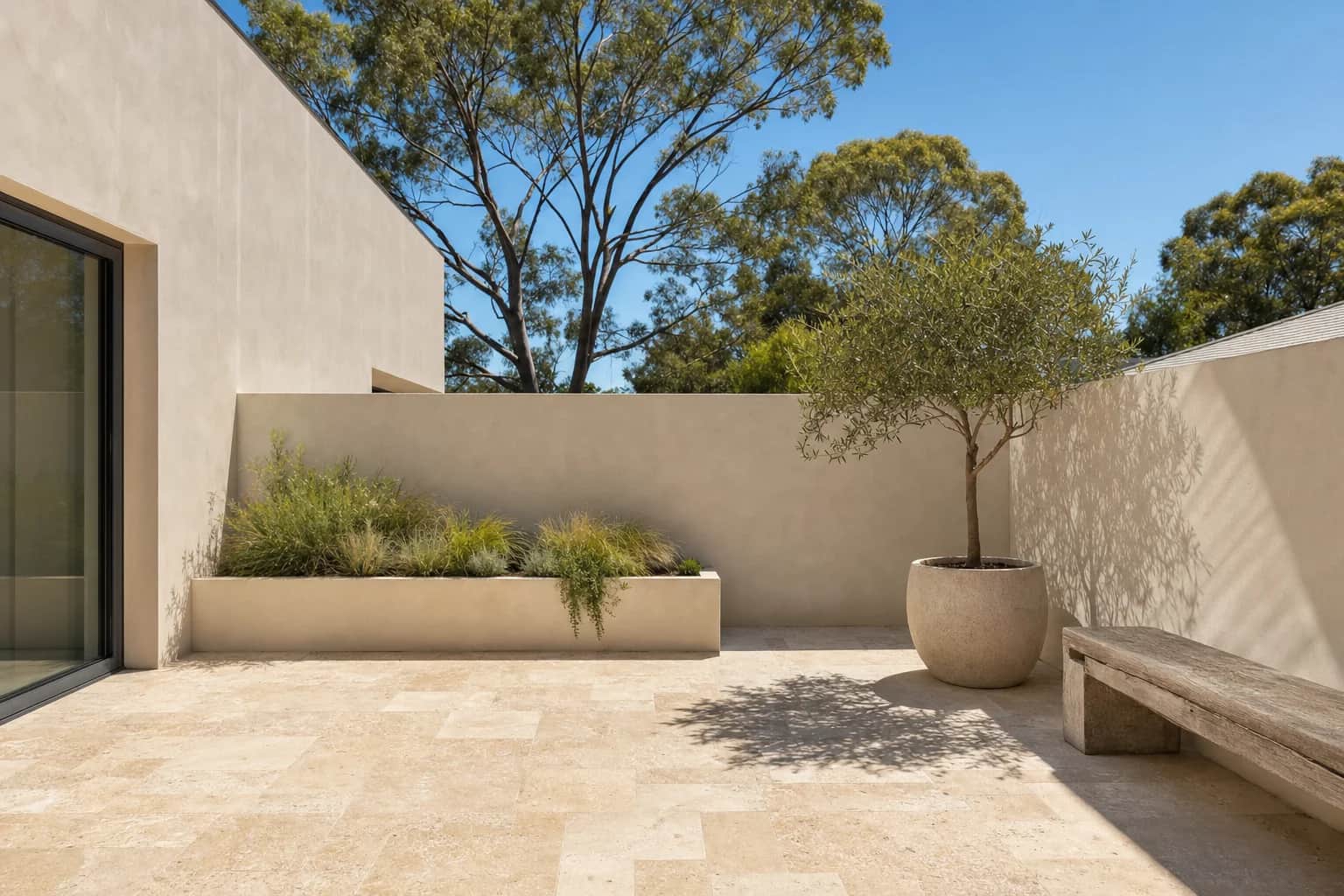
Open courtyards and patios
Out past the roofline, in full Perth sun and full Perth rain. A different material question and different drainage, on the same bed underneath.
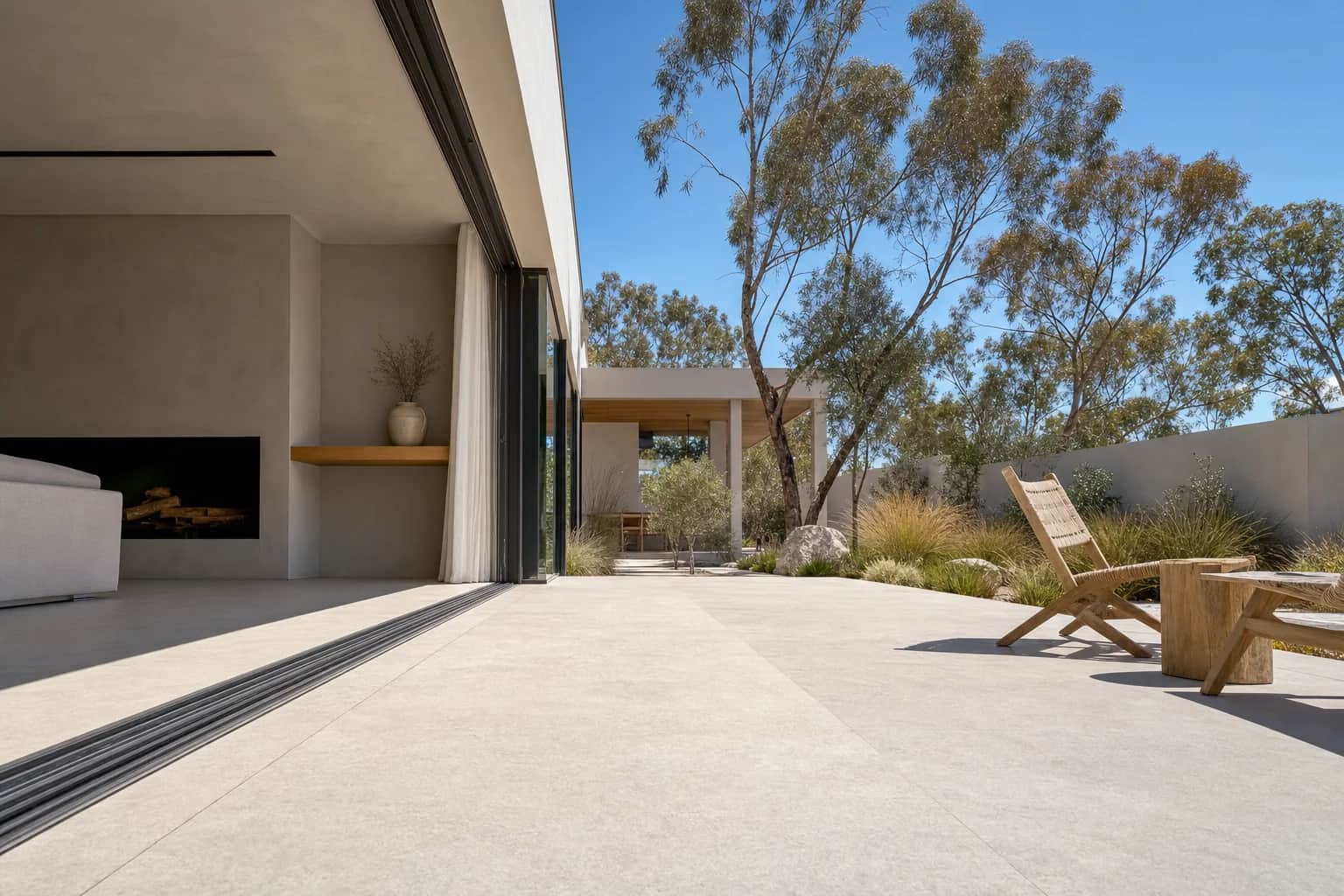
The indoor to outdoor join
Running one floor from inside to out, with the levels set so the doors still work and the water still drains away. It's the part we spend the most time on.
What we're getting right on an alfresco floor
Flat under the furniture
A dining table will find a two millimetre step that bare feet never notice, so under a roof we lay to a tighter tolerance than we would outside.
Water away from the house
We set the fall running away from the wall on every alfresco, so water never sits at the door threshold.
Be safe wet
It gets walked on wet and barefoot, and by people carrying things, so we'll check the slip rating of whatever you pick before you order it.
Read as one floor
The same paver looks different under the roof and out in the sun, so we'll show you a sample in both before you decide.
One floor, carried out through the door
What makes an alfresco feel like part of the house is that the floor doesn't change at the door. The same size paver, close to the same tone, and no step to catch a chair leg or a toe.
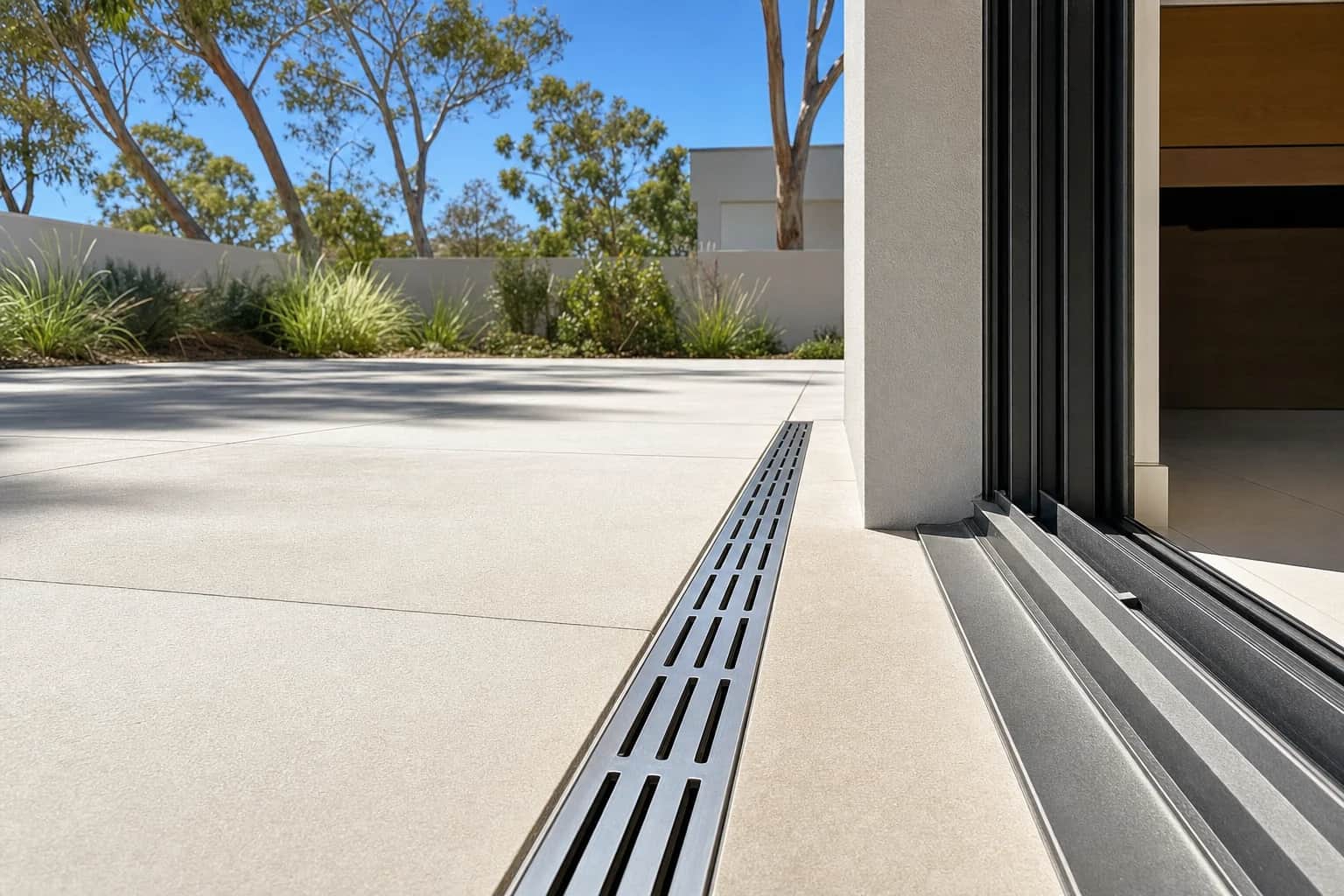
The paving still has to fall away from the building, and still has to sit low enough for the door tracks to drain, and there's only a couple of centimetres between those two.
So we usually solve it with a drain rather than a step. A slim linear grate just outside the door takes the water, which lets the paving start flush and fall away from there.
Slip rating, in plain terms
Every paver and outdoor tile sold in Australia carries a slip rating, measured by the ramp test in AS 4586 and written as an R number. It's worth checking before you settle on a sample, and we'll look it up for you.
- R10Grip
Indoors, or fully covered and dry
Fine under a roof that never gets wet. We'd choose more grip for anything the rain reaches.
- R11Grip
The usual answer for an alfresco
Covered and open areas, patios and courtyards. Grippy wet, still comfortable barefoot and easy to clean.
- R12Grip
Pool surrounds, steps and ramps
More texture again. Worth it where people walk wet, and it does hold a bit more dirt.
- R13Grip
Commercial kitchens and wash-down areas
Rarely what you want at a house. It's rough on bare feet and harder to keep clean.
Porcelain is where it varies most, because the same tile is often made in a polished finish and a textured one. Tell us which you've been shown and we'll check the rating on the outdoor version.
Signs an alfresco needs relaying
Most of it comes back to water, and to whether the paving is fully bedded underneath. If a couple of these sound familiar, it's worth a look.
- Water sits against the house after rain instead of running away from it
- A dark damp line along the wall that never fully dries out in winter
- Green film on the shaded half every winter and nowhere else
- Tiles sound hollow when you tap them, or one corner has lifted
- The step down from the door has become a trip hazard
- Grout has cracked in a straight line where the roof ends and the sun starts
That last one isn't the grout. It's the paving expanding where the covered half and the sunny half meet, and it's something we allow for in the jointing before anything goes down.
If it has already moved, it can be lifted and relaid properly.
Alfresco paving questions
Send us your alfresco and we'll price the floor
A photo from inside looking out is the most useful one, because it shows the threshold. Add a rough size, whether it's covered, and whether there's a slab there already.