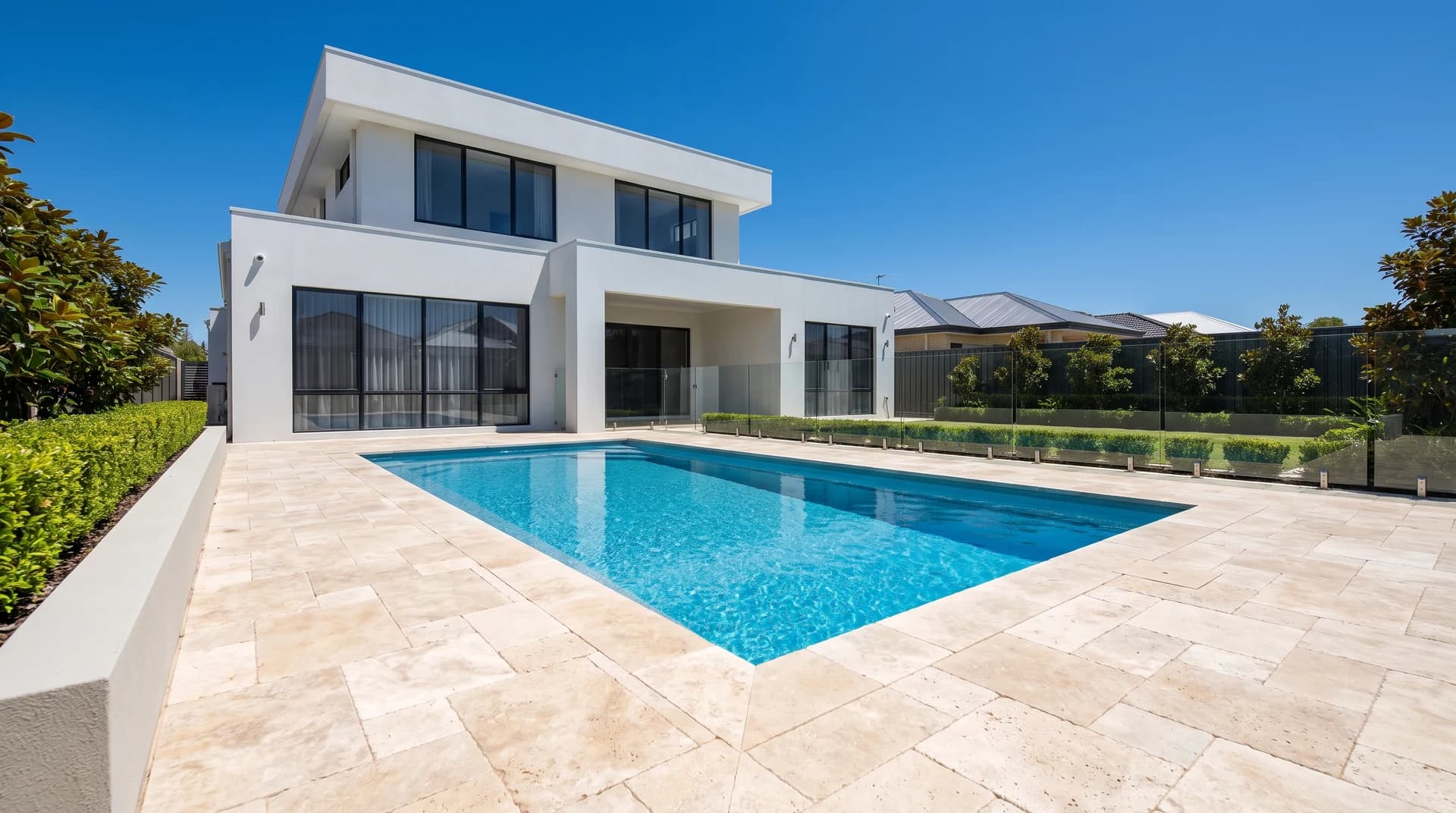
Travertine paving Perth
Travertine paving is what we lay around more Perth pools than every other stone put together, and it's a genuinely good choice. Warm cream through to walnut, cool underfoot in full summer sun, and grippy when it's wet.
- Stays cool underfoot in full summer sun
- Sealed before we hand it over
- Bedded across its whole underside
Get a price for travertine paving
A photo of the area and a rough size is enough to price it.
Supplied, laid and sealed
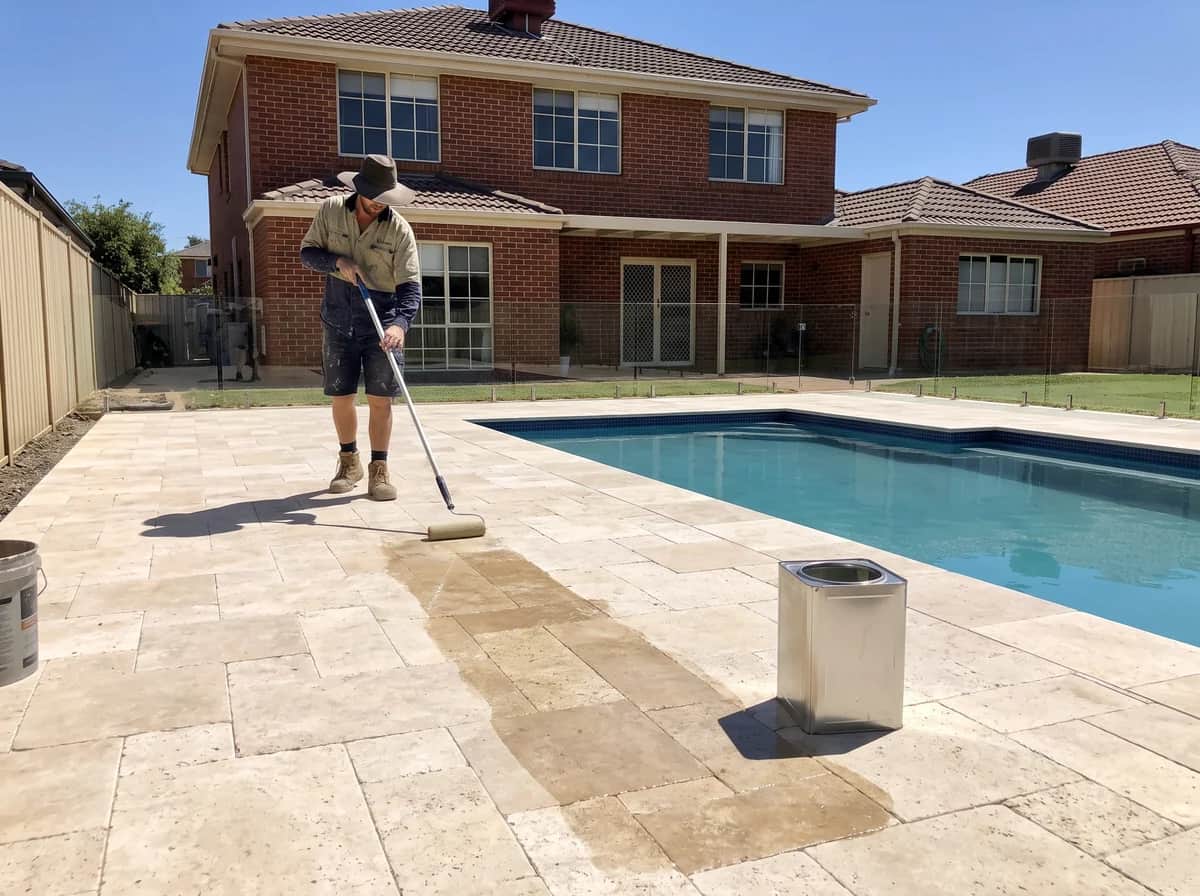
Travertine is the stone most Perth pools end up in. It stays cooler underfoot than almost anything else at the same price, and it grips when it's wet, which is exactly what a pool surround needs.
We supply it, lay it wet on a full mortar bed, cut it to the pool edge and seal it before we leave. Travertine around a Perth pool wants sealing, because unsealed it takes up stains from pool water, sunscreen and anything else that gets spilled on it.
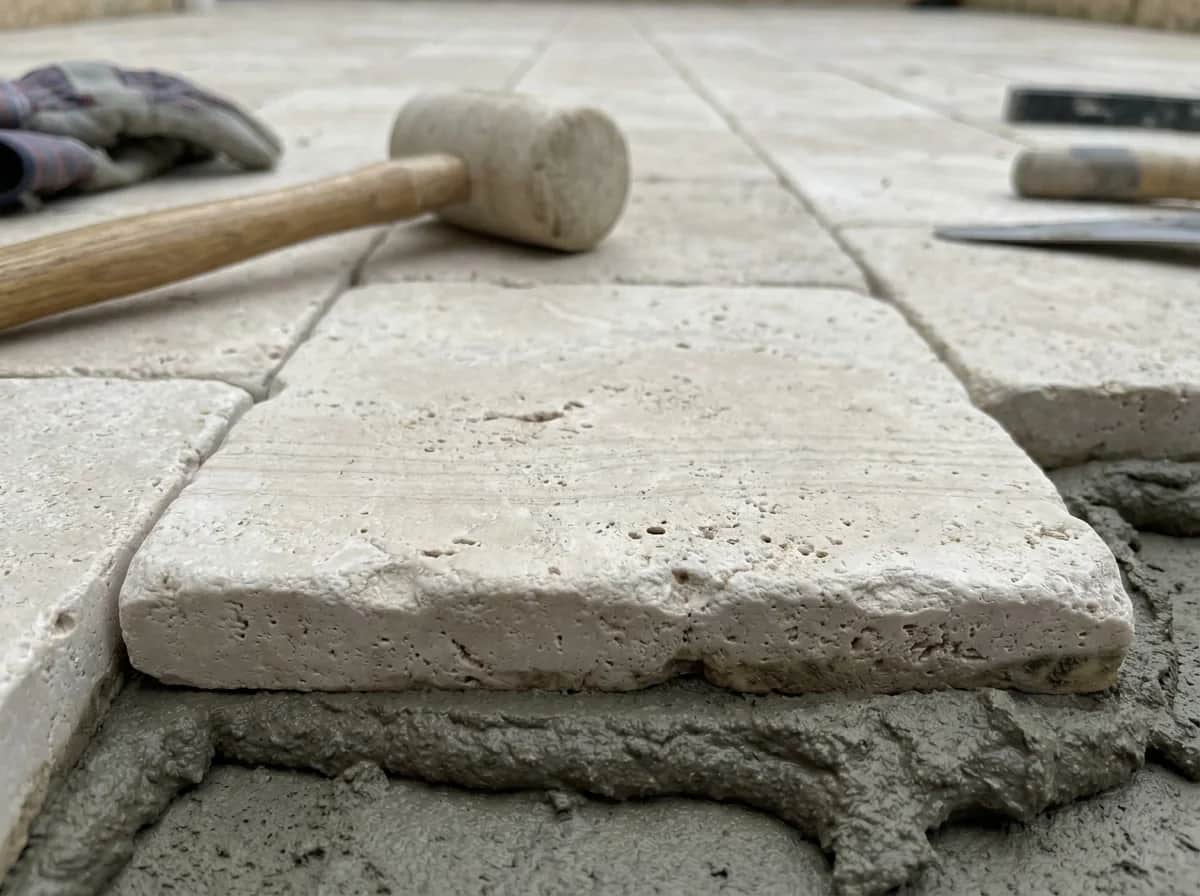
It comes tumbled, with a softened edge and a lightly worn face, or honed and filled for a flatter, more modern surface. Tumbled suits most Perth backyards and it carries a knock better.
What travertine is good at
Most people choose it for how it looks. It's worth knowing how it behaves as well, because that's the part you live with.
Barefoot in a Perth summer
This is the real reason it's so common around Perth pools. A cream travertine surround in full February sun stays walkable barefoot, and that comes down to the pale colour and the open surface together.
Grip when wet
Tumbled travertine has an open, slightly pitted face that keeps its grip with water on it. Around a pool that matters more than anything else, which is why we'd steer you towards tumbled rather than a polished finish.
Hiding a chip
A tumbled edge is already soft and irregular, so a knock on a corner blends in rather than standing out. On a surface that gets furniture moved across it every summer, that's worth having.
Sunny spots more than shaded ones
Like any porous stone, travertine goes green in a spot that stays shaded and damp all winter. For a narrow shaded side return we'd suggest porcelain instead, and travertine everywhere the sun reaches.
Why the bed matters with travertine
Travertine is porous, and that's where everything good about it comes from: the cool surface and the grip when it's wet. It also means the stone takes water in, and whatever is dissolved in that water goes in with it.
So the bed underneath matters more than it does with a sealed material. We lay travertine on a full mortar bed rather than on sand, because a gap under a porous stone fills with water, and that water comes back up through the face as a dark patch that won't clean off.
Then we seal it with a penetrating sealer rather than a topical one. A penetrating sealer sits inside the stone and leaves the surface looking and feeling like stone, where a topical coating sits on top, looks wet, and lifts in Perth sun within a couple of summers.
What moves a travertine price
With travertine the grade, the finish and the shape of the pool all move the number, so two jobs of the same area can price quite differently.
Grade and colour
A standard cream tumbled paver and a premium walnut or silver travertine sit well apart on price, so it's worth telling us the colour you like before we quote.
Tumbled or honed and filled
Honed and filled is machine flattened with its natural pitting filled at the factory, which costs more than tumbled. For a pool surround we usually suggest tumbled anyway, so it's a question of the look you want.
How curved the pool is
A rectangular pool is a straight run of cuts. A freeform surround means cutting almost every paver against the edge, and that takes time.
Sealing, and what's been on it before
New travertine gets sealed as part of the job. Stripping an old topical sealer off existing stone is separate work, and it takes a while.
Looking after travertine
Travertine is a hardy stone and it rewards a bit of looking after. Five things worth knowing, and none of them are hard.
- Reseal it every three to five years, and sooner on the sunniest edge. A penetrating sealer is what keeps pool water, sunscreen and leaf tannin out of the stone.
- Stick to a penetrating sealer rather than a topical coating. A penetrating one soaks in and keeps the stone looking like stone, where a coating sits on the surface and lifts in Perth sun.
- Use pH neutral cleaners only. Travertine is a calcium carbonate stone, so anything acidic will etch the surface. Warm water, a soft broom and a neutral cleaner is all it wants.
- Rinse off sunscreen and spills reasonably promptly. Sealed travertine gives you plenty of time, and a hose down after a party is the whole job.
- On a honed and filled surface, top up any filler that comes out. The factory fills the natural pitting, and making good the occasional hole keeps grit from collecting in it.
Frequently asked questions about travertine paving
The other materials we lay
Crazy paving
Cut and fitted on site, piece to piece. The surface for a freeform pool or an awkward courtyard.
Limestone paving
Pale, local and soft. At its best against a limestone wall or under an alfresco.
Porcelain paving
Near zero absorption, exact sizing, never needs sealing. The low maintenance answer.
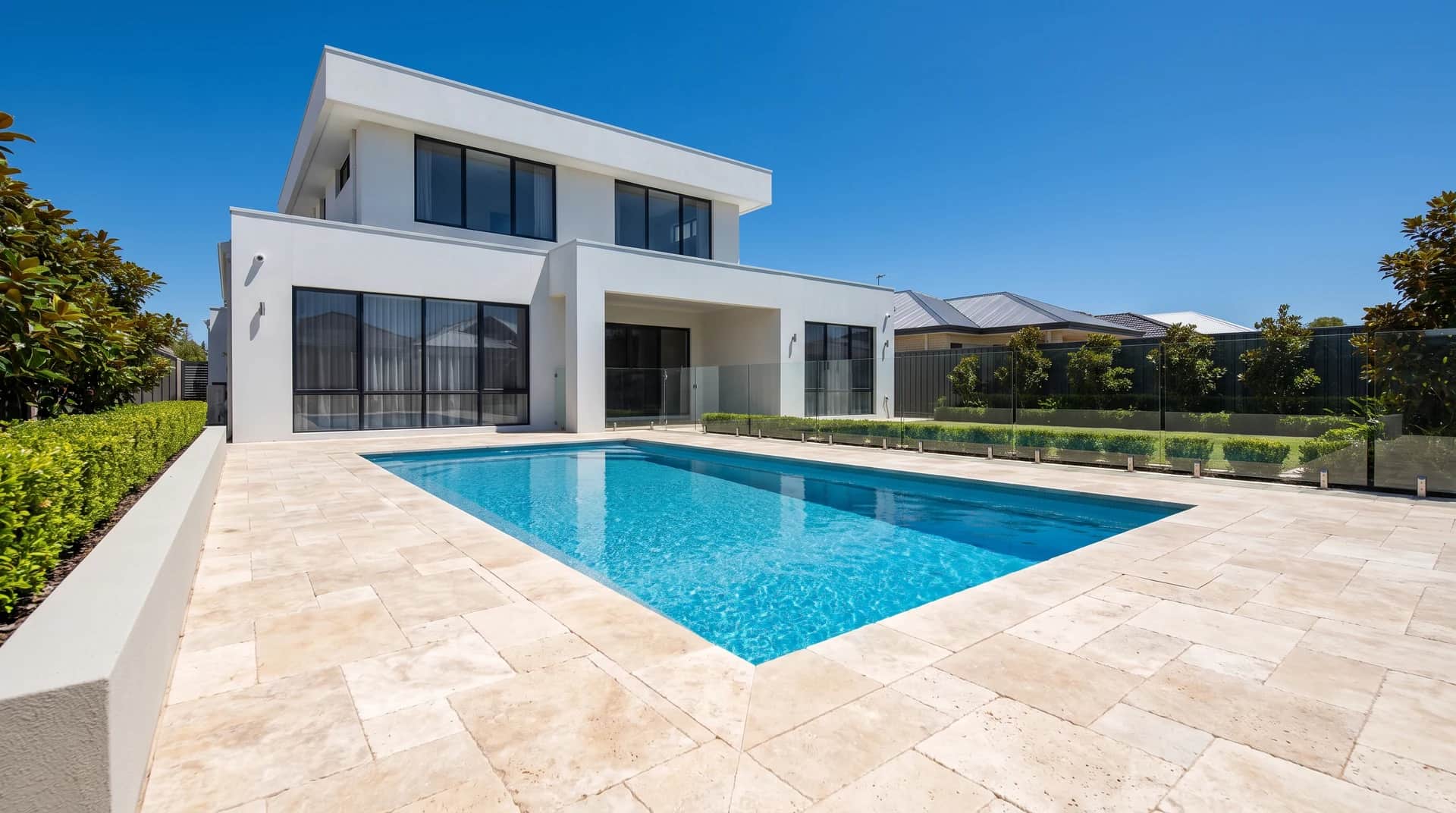
Send us the area and we will price it in travertine paving
A photo of the area and a rough size is enough. If we think another material would serve you better we will say so, and say why.