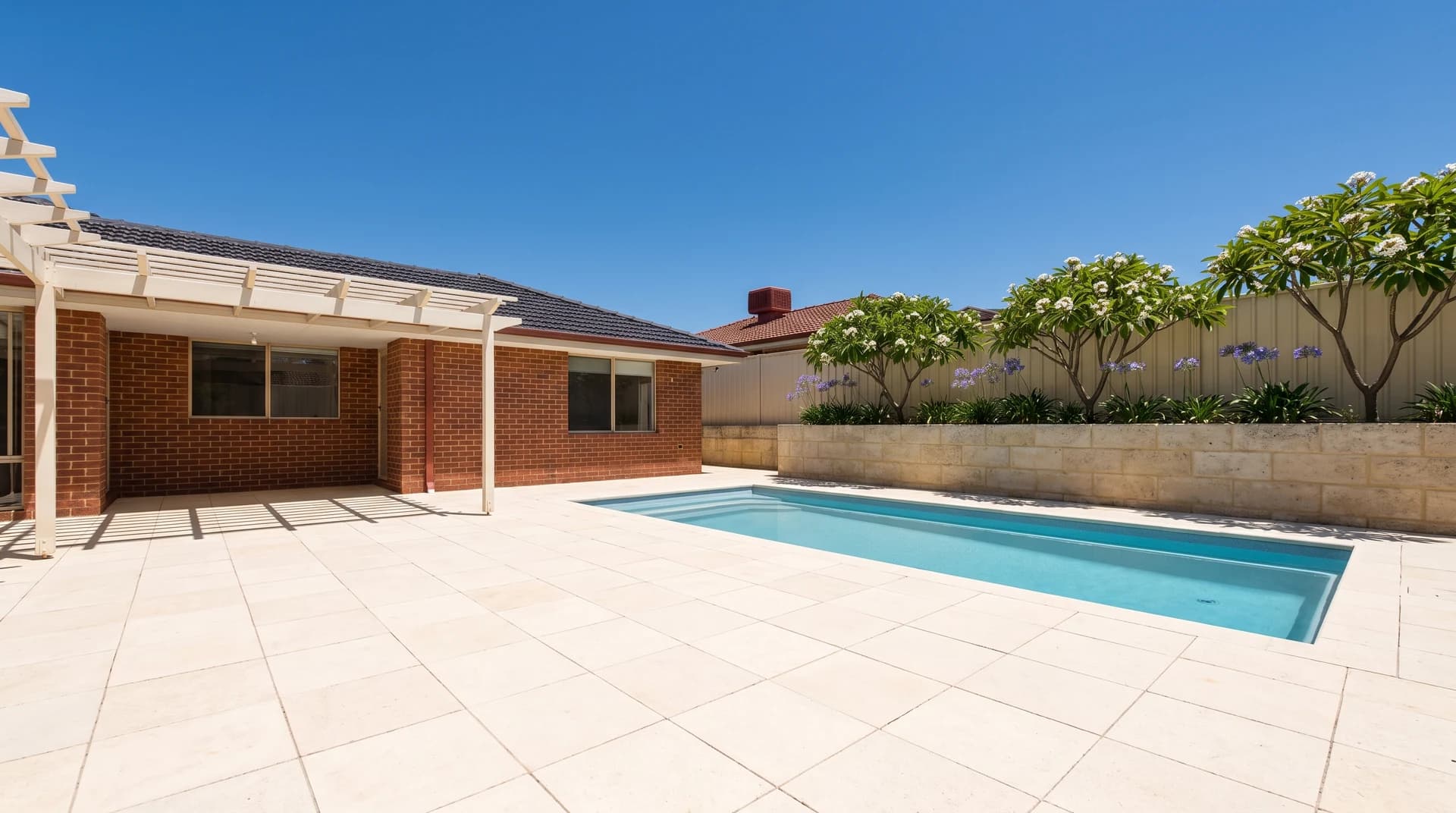
Limestone paving Perth
Limestone paving is about as Perth as a surface gets, because most of the city is built on the stuff. It's pale, it's local, it sits beautifully against a limestone wall, and it's softer than the other materials we lay.
- Pale and local, and the coolest underfoot
- Natural or reconstituted, both laid wet
- Best under foot, not under a car
Get a price for limestone paving
A photo of the area and a rough size is enough to price it.
Natural and reconstituted, laid the same way
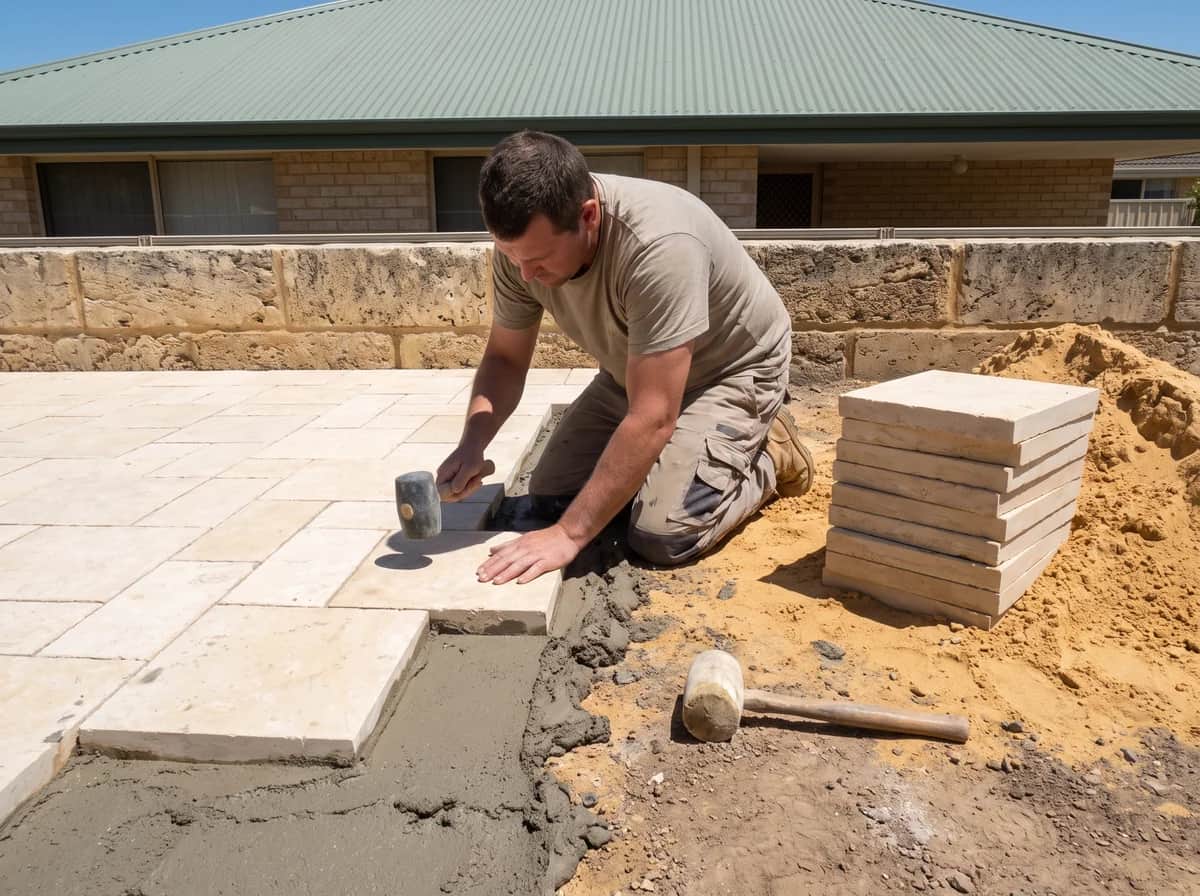
Two different products share the name, and they're worth separating before you get a price. Natural limestone is quarried stone cut into pavers, with the colour variation and the shell fragments that come with it. Reconstituted limestone is limestone aggregate cast into a consistent block, and it's what most Perth walls and a lot of Perth paving are made of.
Natural is warmer and less uniform, and it costs more. Reconstituted is exact in size and considerably cheaper, and across a large area it looks flatter and more modern than people expect.
We lay both wet on a full mortar bed, and with limestone that matters more than with anything else we lay. The next section explains why.
Where limestone suits best
Limestone is lovely in the right spot, and we'd rather talk you through where that is than let you find out later.
Against limestone walls and older Perth homes
Nothing matches a reconstituted limestone retaining wall the way limestone paving does. On a block that already has limestone in it, everything sits together as one.
Alfrescos and courtyards under cover
Out of the weather and away from the pool edge, limestone is a beautiful pale surface and its softness stops being a consideration. It's where we recommend it most often.
Cooler underfoot than almost anything
It's very pale, so it reflects the sun rather than soaking it up. In full Perth sun a limestone surface is one of the most comfortable to stand on barefoot.
Worth a conversation for a pool or a driveway
Limestone is soft, so a car will mark it and salt water works on the exposed face over the years. We'd point you at a denser paver in a limestone tone for a driveway, and if you want it around a pool we'll show you how an eight year old limestone surround looks first.
Why the bed matters more with limestone
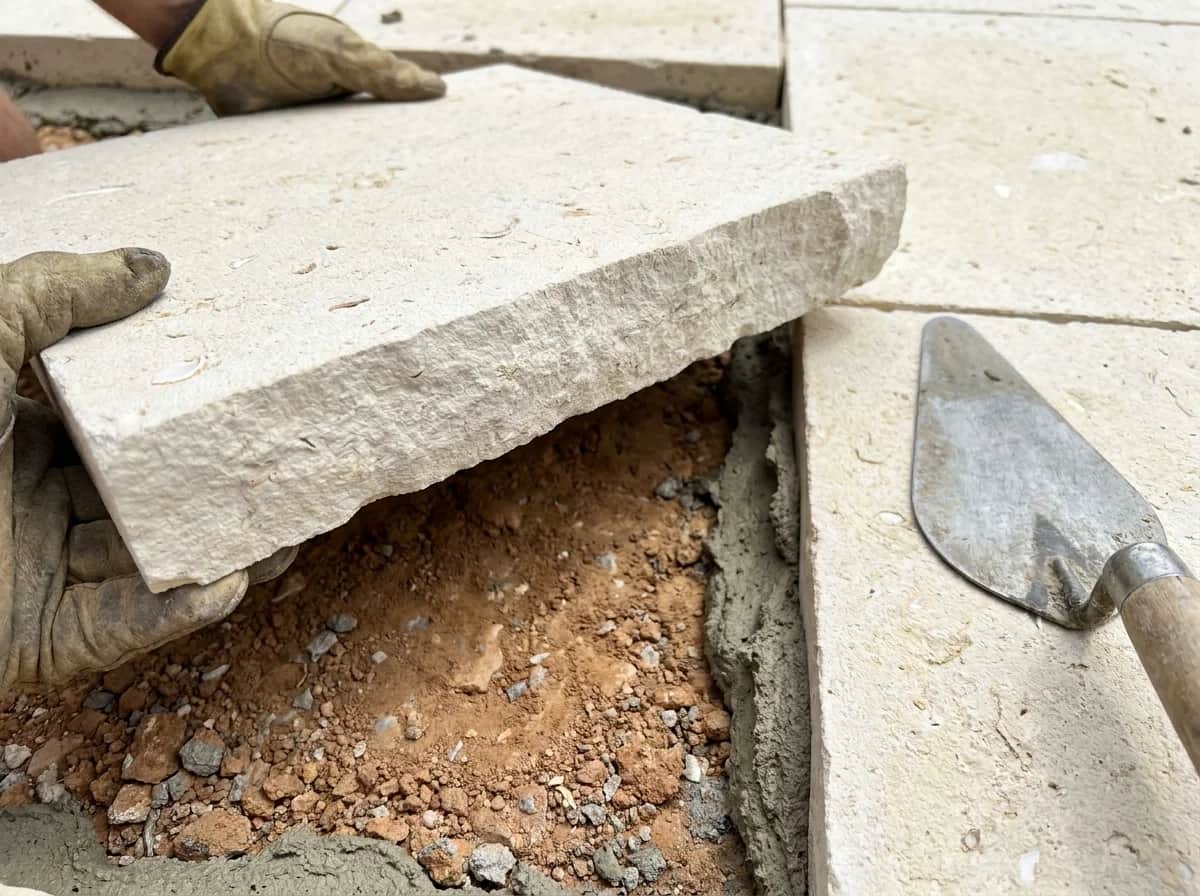
Limestone is porous and comparatively soft, so it needs support right across its underside. A paver resting on a few high spots has an unsupported middle, and a soft stone reaches its limit there sooner than a dense one does.
A full mortar bed solves that by supporting the whole paver. It's the single biggest reason a properly bedded limestone surface stays intact where one laid on sand often doesn't.
The joints get the same attention. Limestone is a calcium carbonate stone, so it reacts to anything acidic, which is why we'll always tell you to keep to a pH neutral cleaner.
What moves a limestone price
Limestone has the widest price range of anything we lay, because two quite different products share the name.
Natural or reconstituted
This is the big one. Reconstituted limestone is aggregate cast into consistent blocks and it's considerably cheaper. Natural limestone is quarried and cut, carries real colour variation, and costs more for it.
Size of the paver
Larger natural limestone comes in thicker sections, which is more material and more handling on every piece, so a big format isn't simply the same stone in a bigger square.
What the base needs
Because limestone is soft, the base has to be right underneath it. Where the ground needs real work first, that work is part of the job here rather than something to trim.
Sealing
Worth doing on an alfresco or near a pool, and it's priced separately from the laying. It slows staining and salt wear, and it's a good idea in both spots.
Looking after limestone
Limestone is easy to live with as long as you know a couple of things about it. These are the ones that matter.
- Clean it with pH neutral products only. Anything acidic will etch the surface, and that includes most supermarket tile, driveway and rust removers. Water and a stiff broom does most of the work anyway.
- Seal it near a pool or on an alfresco. A penetrating sealer slows staining and slows the wear salt water causes on the exposed face.
- Leave new efflorescence alone. The pale salts that come through the face of new limestone are the bedding drying out, and they normally clear on their own within the first year.
- Keep it off the driveway. Limestone is soft enough that tyres mark it, so if you want the look out the front we'd lay a denser paver in a limestone tone.
- Make sure it's bedded on a full bed. Continuous support underneath is what keeps a soft stone intact, and it's how we lay every limestone job.
Frequently asked questions about limestone paving
The other materials we lay
Crazy paving
Cut and fitted on site, piece to piece. The surface for a freeform pool or an awkward courtyard.
Travertine paving
The default Perth pool stone. Cool underfoot, grippy wet, and sealed before we leave.
Porcelain paving
Near zero absorption, exact sizing, never needs sealing. The low maintenance answer.
Send us the area and we will price it in limestone paving
A photo of the area and a rough size is enough. If we think another material would serve you better we will say so, and say why.