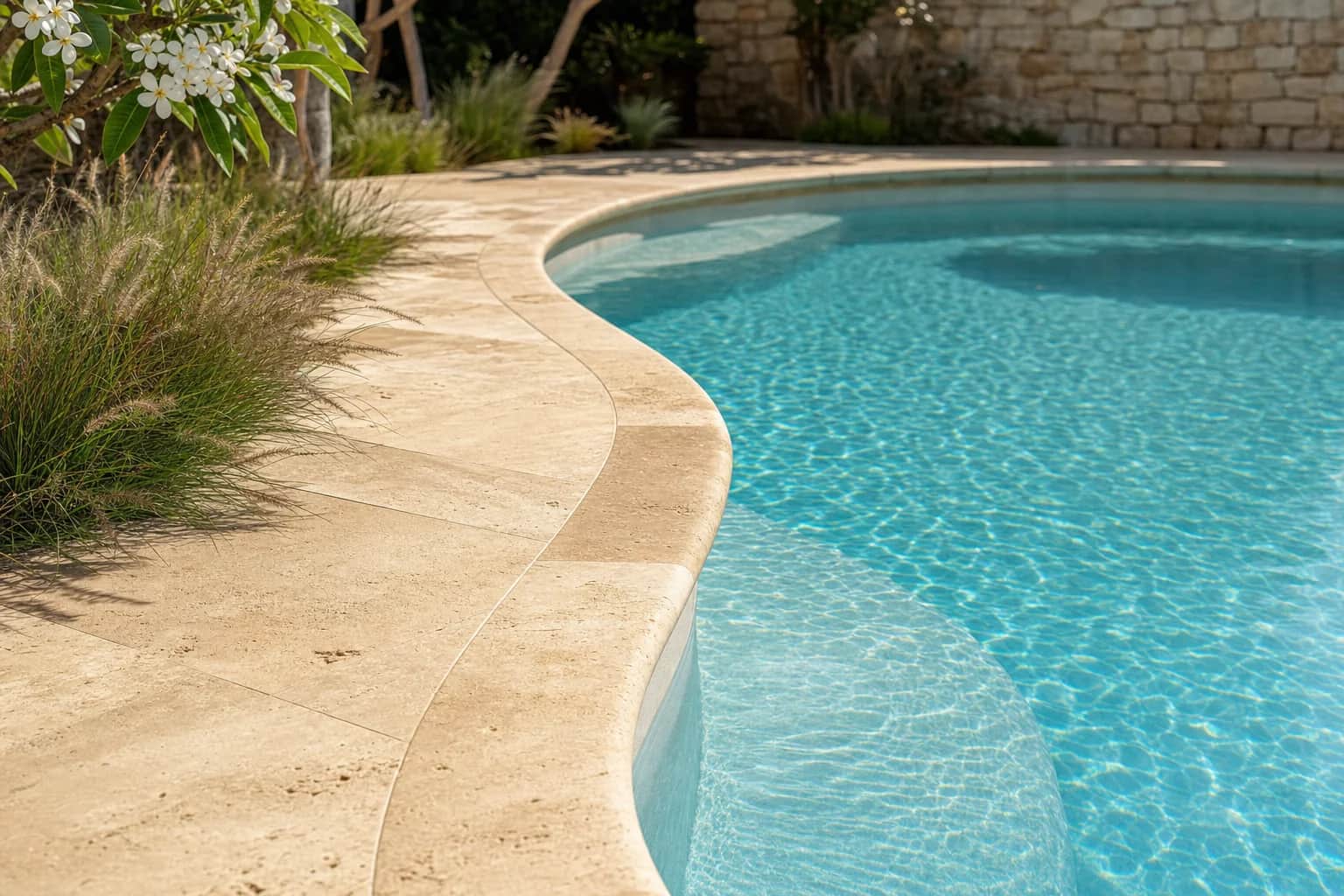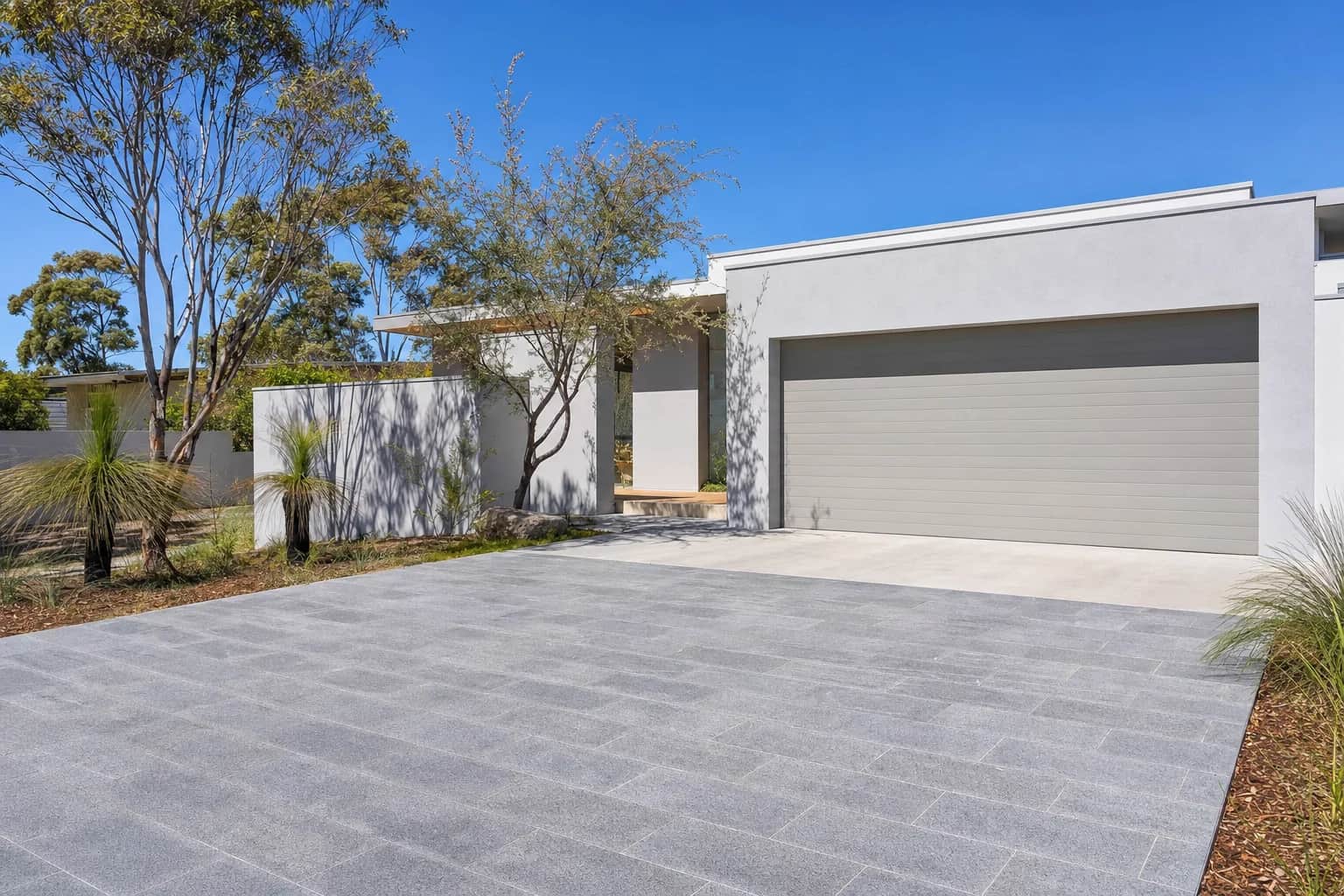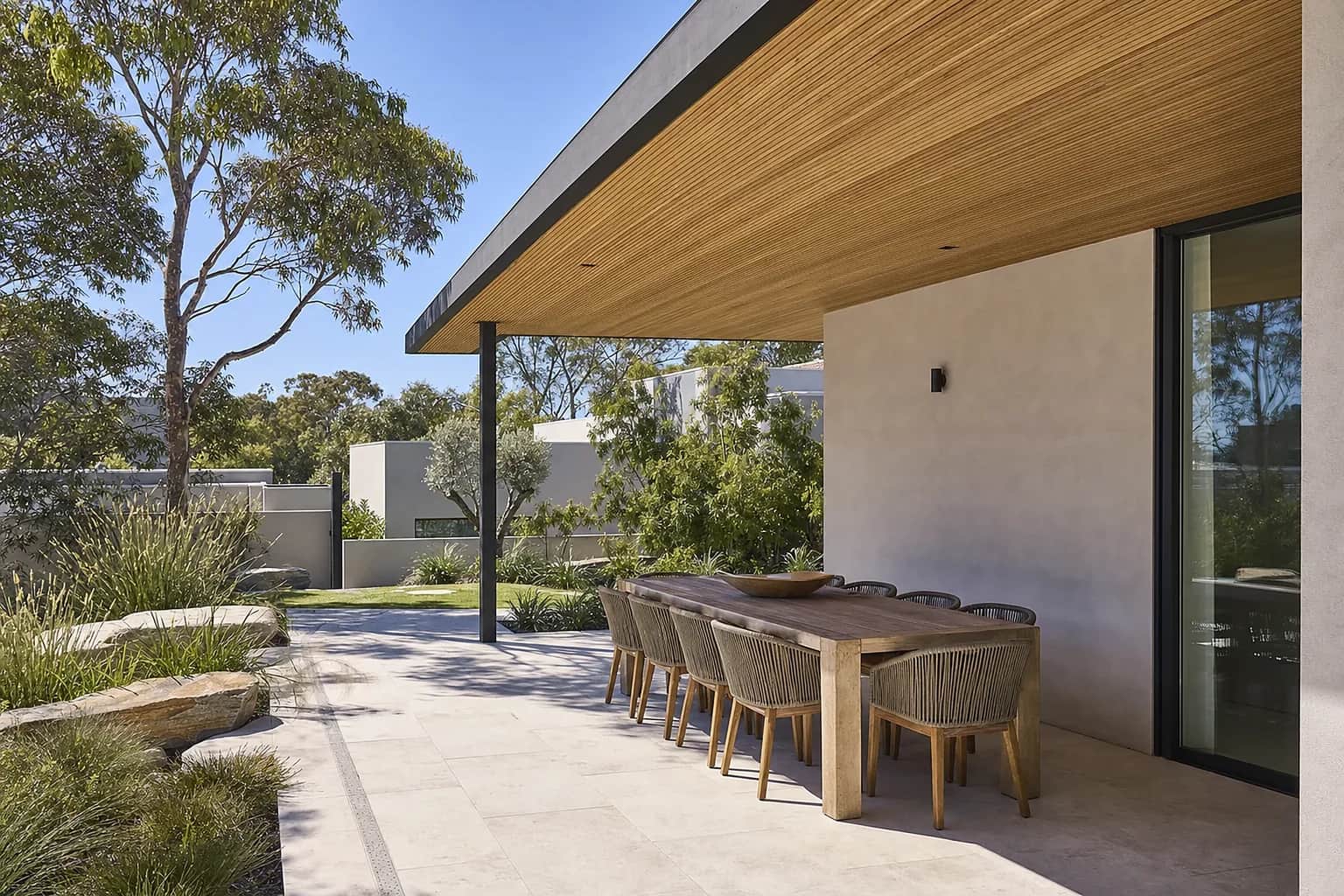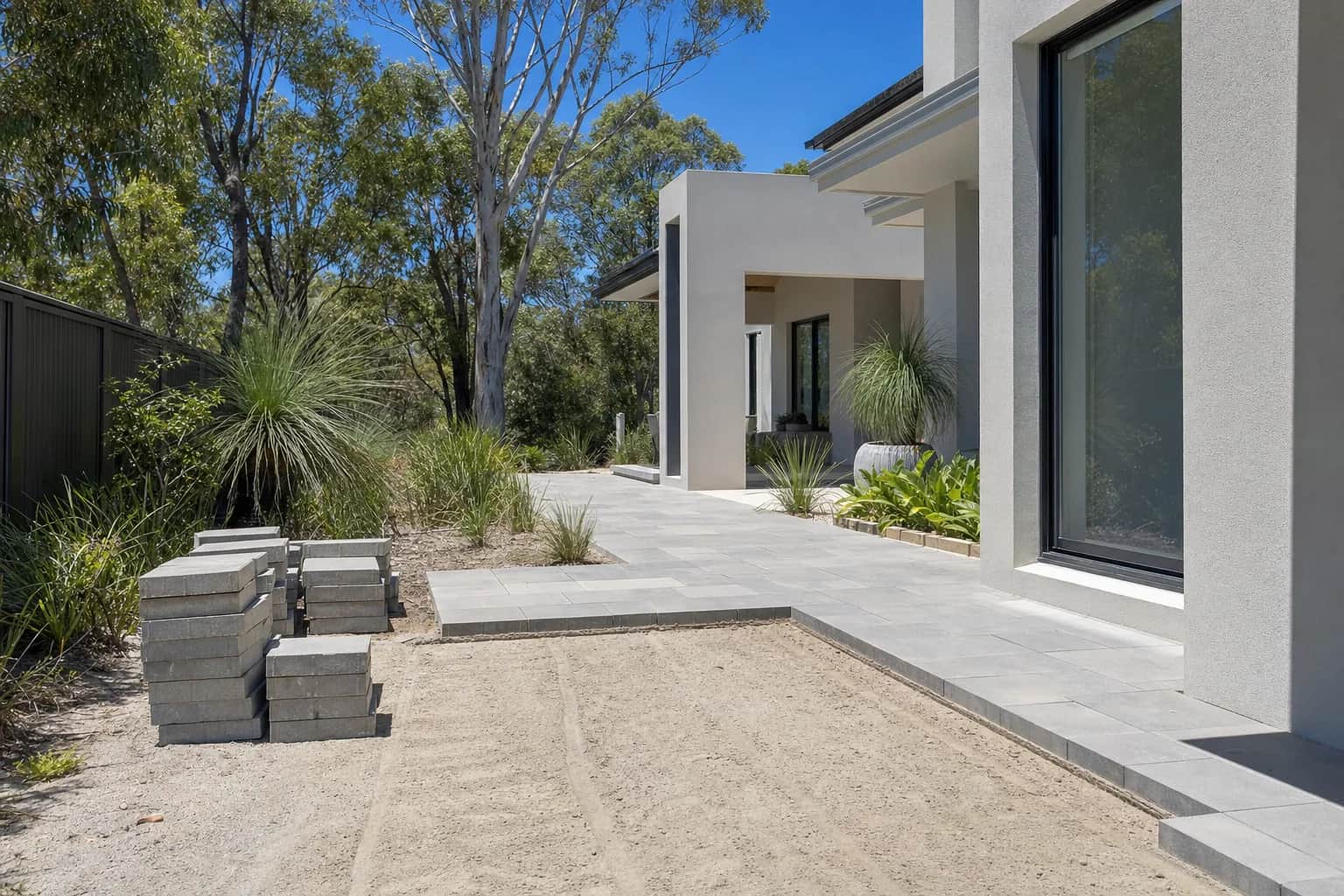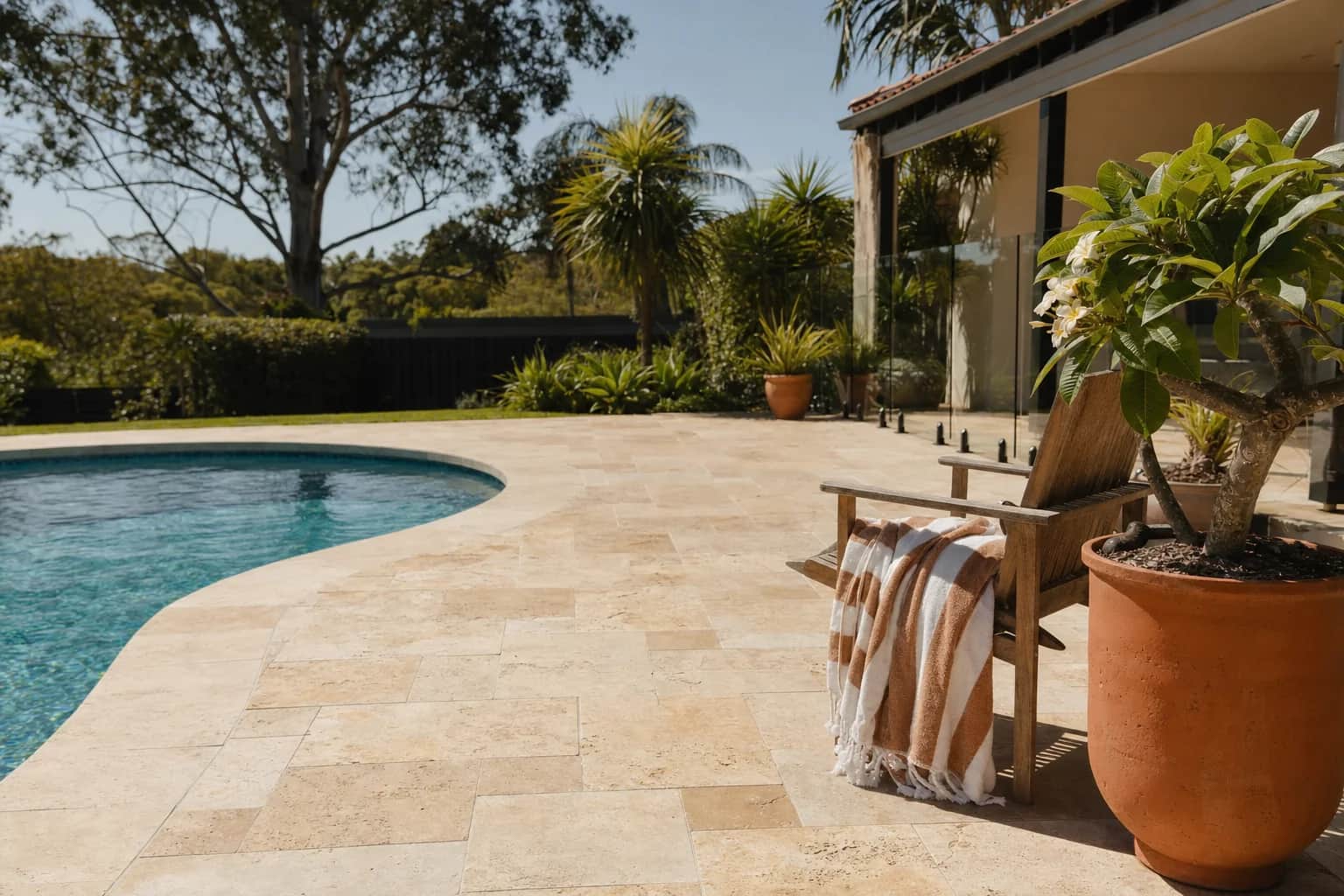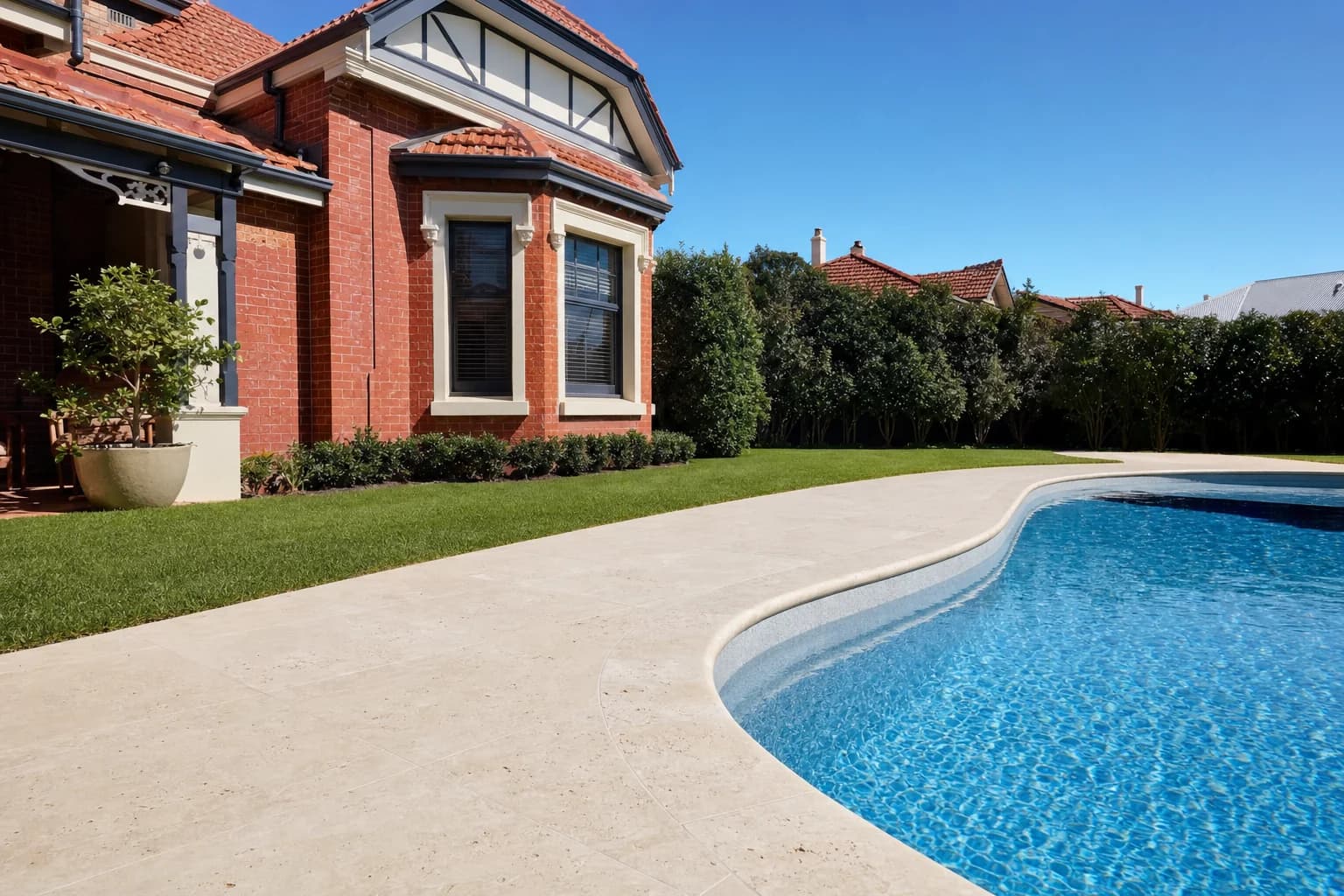
Claremont pools take most of the yard, leaving narrow surrounds where every paving cut is on show. Small backyards and big pools are the pattern here, and a narrow surround is far less forgiving than a wide one.
Get a price for Claremont
A photo of the area and a rough size is enough to price it.
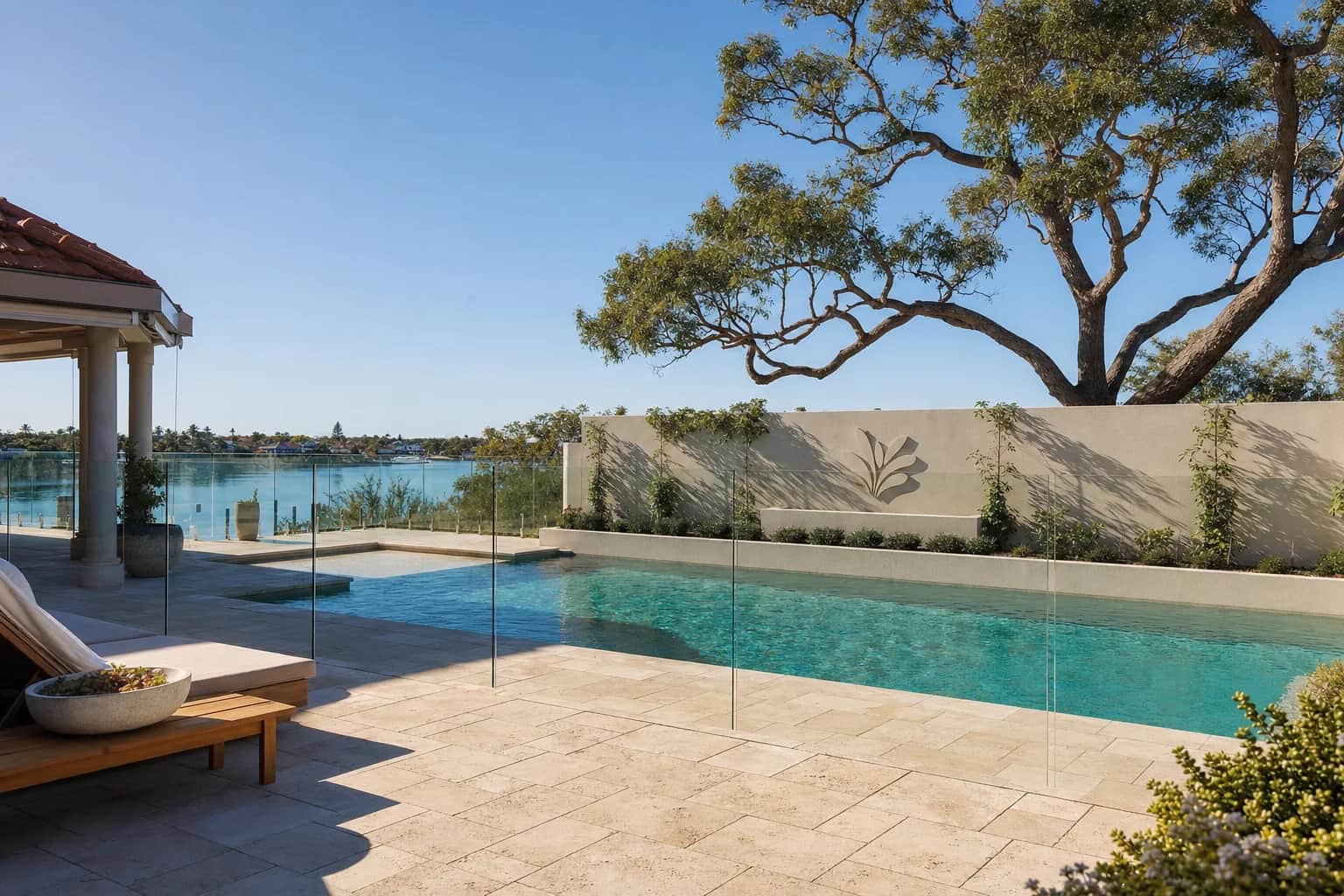
Same crew and the same method behind all of it. What changes between these is the base under them, the load they take and how much of the work is cutting.

Pool paving
The surround, laid wet on a full mortar bed so it stays flat and stays put when the ground moves.
Learn more
Pool coping and capping
The edge that everyone touches and everyone looks at. Cut to the curve, not forced around it.
Learn more
Driveway paving
Large-format porcelain and natural stone, bedded to take a car rather than to look right on day one.
Learn more
Alfresco and outdoor living
Inside floor level carried out through the door so the room does not stop at the threshold.
Learn more
Replacing failed dry lay
Lifting paving that has sunk, rocked or spread, and relaying it properly. About half of what we do.
Learn moreEvery paver goes down on a full bed of wet mortar across its whole underside, over a base compacted to carry what will sit on it. No voids under the middle, nothing to rock, nothing for water to get into and sit in.
It is slower than screeding sand and laying onto it, and it costs more on the day. It is also the only version of this that is still flat in ten years, which is why it is the only version we do.
Every paver, every job, on a full bed of mortar.
Central suburbs
Limestone closer to the surface, older housing stock, mature trees and access measured in centimetres.
Claremont ground is unremarkable, sand over limestone like its neighbours, and it is not what makes these jobs difficult.
The blocks are. A character home on a Claremont block with a pool in it leaves a surround that is often less than a metre and a half, and sometimes a good deal less on the tight side.
That turns the job into a setout problem. The layout gets worked from the coping and the visible edges backwards, so the full pavers land where people look and the cut pieces land against the wall. Laying it the other way is what produces a slice of paver along the pool edge.
01
Setout decides the look
On a narrow surround the pattern is planned on paper before a paver is cut. There is no room to absorb an error by adjusting the last row.
02
Coping and surround together
Where the surround is narrow, the coping and the paving behind it read as one surface. They get set out as one, in one material family, or the join becomes the thing you notice.
03
Access past the pool
Getting material to the far side of a pool on a tight block often means around the front and through a side gate. It is planned, and it is quoted.
Claremont and everything around it. If your street is on the edge of the boundary, it makes no difference to us: ask anyway.
We also pave nearby
Every area we cover
The suburb tells us the ground and the likely access. The photo tells us the job. Together they are usually enough to talk about a real number rather than a range.